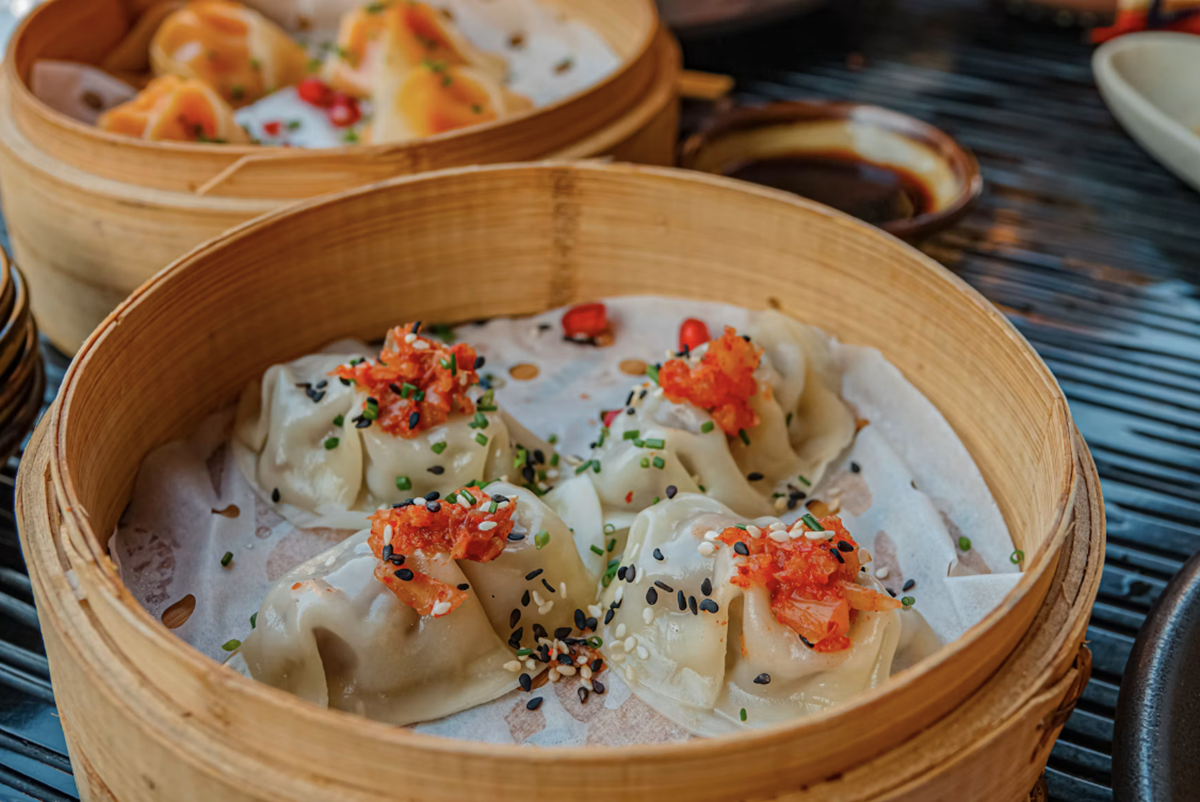
D umplings have moved from traditional banquet tables and weekend brunches into the centre of casual dining. London restaurants now serve them as quick lunches, shared plates and late-evening comfort food, often in relaxed rooms where ordering another basket feels easy. Their appeal comes from variety: a small change in wrapper, filling or cooking method produces a distinctly different bite. That flexibility has helped dumpling culture reach diners who want bold flavours, sociable meals and good value without the ceremony of formal dining.
The Rise of Casual Dim Sum
Dim sum has long been associated with communal eating. Its roots in southern Chinese tea houses help explain how dim sum developed as a style of shared dining built around small plates and tea. The modern casual format keeps the pleasure of sharing whilst loosening the traditional timetable and setting.
Restaurants can now offer a focused dumpling menu throughout the day, with diners ordering two or three plates before adding more. This flexible approach suits mixed groups because steamed, fried and vegetarian choices can sit comfortably in one order.
Technique Behind the Fold
A good dumpling starts with balance. The wrapper must be thin enough to feel delicate but strong enough to contain moisture as it cooks. Too much filling stretches the dough and weakens the seal, whilst too little leaves a heavy mouthful of wrapper.
Pleating also has a practical purpose. Pinched folds hold the edges together and can identify different fillings in a busy kitchen. At home, place a teaspoon of filling in the centre, lightly wet the rim and press out trapped air before sealing. Keep unused wrappers beneath a damp tea towel so they remain pliable.
Cooking methods change the result. Steaming gives a soft, clean finish, boiling creates a tender chew, and pan-frying adds a crisp base with a juicy centre.
Neighbourhood Hotspots Worth Visiting
London’s strongest dumpling spots often reflect the character of their neighbourhoods. Transport hubs work well for quick baskets before a train, whilst residential areas favour leisurely sharing menus and takeaway. King’s Cross and Dalston show how the same food can suit office lunches, evenings out and relaxed weekend meals.
Diners looking for a Queens Park restaurant or another neighbourhood dumpling spot should check the current location, menu and service options before travelling. The linked restaurant currently serves diners and takeaway customers through its King’s Cross and Dalston locations.
When choosing a restaurant, look beyond the number of fillings. A short menu with wrappers folded to order can deliver better texture than an oversized selection prepared far ahead. Learning about traditional dim sum dishes can also help first-time diners recognise classic choices and understand how they are usually served.
For a balanced first order, try one steamed basket, one crisp dish and a vegetable plate. Three dishes usually give two diners enough variety to decide what deserves a repeat order.
Pairing Flavours for Maximum Punch
Dipping sauce should sharpen a dumpling’s filling without covering it. Start with soy sauce and rice vinegar in equal parts, then adjust one element at a time. Chilli oil adds warmth, grated ginger brings freshness, and a few drops of sesame oil contribute a roasted aroma. British spelling may favour “flavours”, but the principle is universal: restraint keeps each ingredient clear.
Match richer pork or mushroom fillings with extra vinegar. Delicate prawn and vegetable dumplings suit ginger, spring onion and lighter sauces. Fried dumplings benefit from acidity because it cuts through the crisp, oily surface.
Order in stages if the restaurant allows it. Begin with subtle steamed varieties, move towards fried plates and finish with the hottest sauce. That sequence keeps your palate alert, right down to the final pleated parcel.