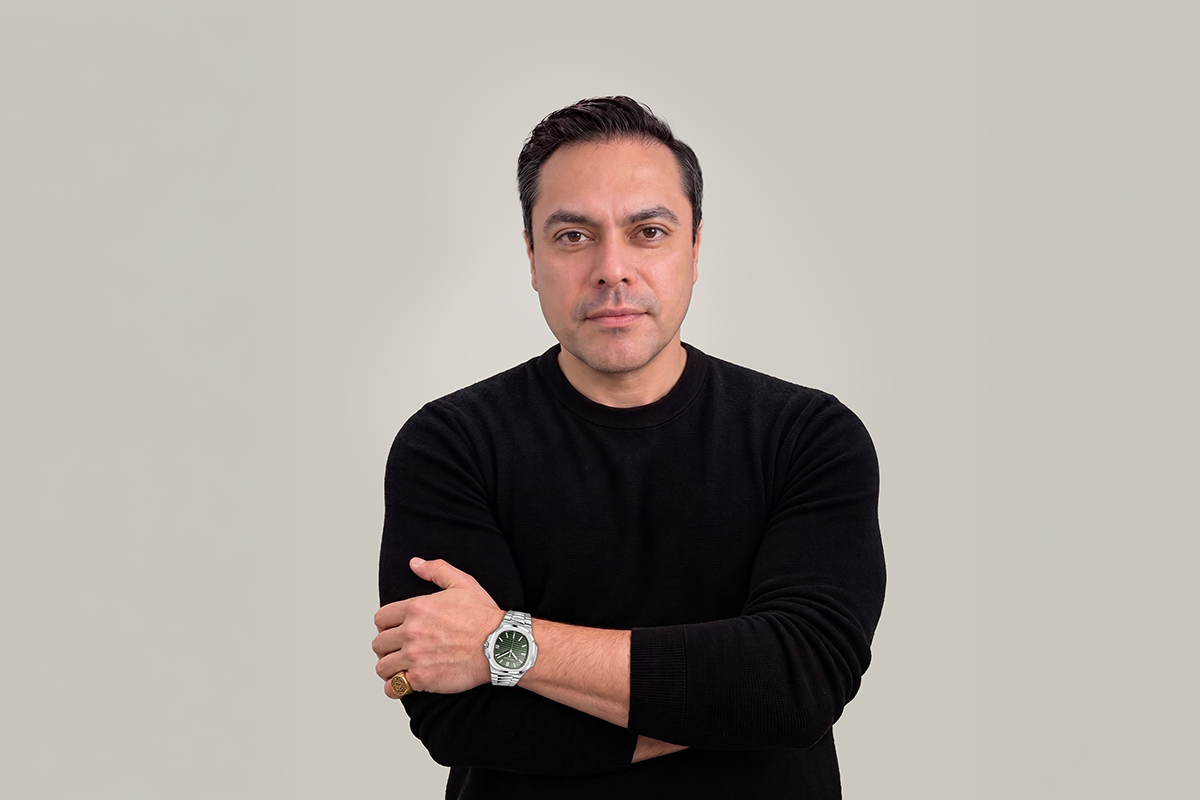
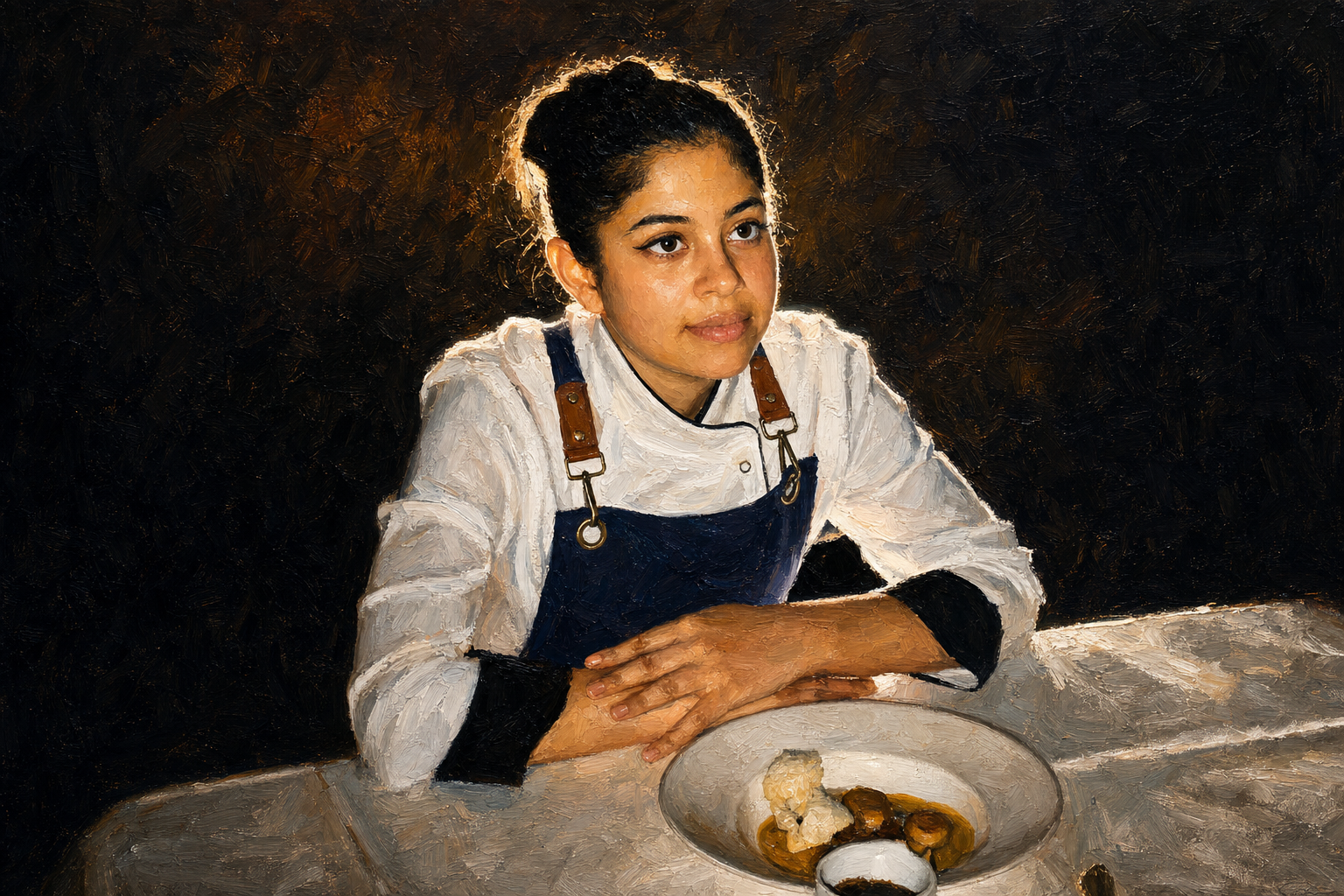
Photo: Nigar Parvin brings an analytical mind and creative instinct to a professional career built around flavour, precision and cultural identity.
Where Science Meets The Stove
Nigar Parvin left Data Science for professional cookery, bringing analytical precision to a culinary identity shaped by European technique, Bengali heritage, family memories and an ambition to inspire others.
The UK-based chef has taken an unconventional route into professional kitchens, combining European technique, South Asian heritage and an analytical approach shaped by her academic past.
Chef Nigar Parvin has followed a less conventional route into Britain’s professional kitchens, moving from an academic background in Data Science and Analytics to a career increasingly focused on restaurant cooking, recipe development and the relationship between European technique and South Asian flavours.
In an interview with Taste Asia, Parvin discussed how her previous academic life continues to influence the way she approaches food, arguing that the analytical and creative worlds are more closely connected than they might initially appear.
Parvin holds a Master’s degree in Data Science and Analytics from Royal Holloway. Rather than abandoning those skills when she moved into cookery, she says she uses them to analyse workflow, manage preparation, reduce waste and approach recipe development methodically.
Nigar Parvin is an exciting culinary talent whose intelligence, cultural curiosity and disciplined creativity give her cooking a distinctive identity.
“Data Science taught me how to analyse problems, recognise patterns and make informed decisions,” Parvin told Taste Asia. “Cooking satisfies a different part of my personality—the creative side—but the two disciplines complement each other more than people might expect.”
That combination of precision and creativity has become a recurring theme in her developing culinary identity.
Highlights
- From Data Science To Professional Cookery
- Master’s Graduate Turned Professional Chef
- European Technique Meets Bengali Heritage
- Chef De Partie At Stoke Place Hotel
- Worked Alongside Giancarlo Caldesi
- 80+ Original Recipes
- Making Restaurant Techniques Accessible At Home
- Food Inspired By Family And Childhood Memories
- An Advocate For Women In Professional Kitchens
- Dreams Of Opening Her Own Restaurant
- Plans For A Future Cookbook
- Passionate About Teaching And Mentoring Young Chefs
- Precision, Creativity And Culture On One Plate
European Technique, South Asian Flavour
Parvin’s food draws heavily on both classical European cooking and her Bengali and wider South Asian heritage.
Her professional experience has included working at the AA Rosette Caldesi in Campagna alongside Italian chef Giancarlo Caldesi, an experience she described to Taste Asia as a defining period in her development.
The most important lesson, she said, was deceptively simple: “Simplicity demands mastery.”
Parvin argues that complicated techniques and elaborate garnishes can sometimes disguise weaknesses, while producing a balanced dish from relatively few ingredients requires greater confidence, restraint and understanding of the produce.
That experience continues to influence how she approaches dishes today.
“Does every ingredient truly deserve to be on the plate?” is the question she says she asks when developing food. If an ingredient does not have a clear purpose, she believes it should be removed.
Her approach to combining cuisines follows a similar principle.
Rather than treating fusion as an opportunity to combine ingredients simply because they originate from different culinary traditions, Parvin says there must be a reason for bringing those traditions together.
European cookery provides discipline, technique and precision, while her South Asian background contributes an instinctive familiarity with spice, aroma and layered flavour.
“My aim is always harmony, not contrast,” she told Taste Asia.
Her Chicken Meatballs in Rich White Gravy is one example. Parvin describes the dish as combining preparation and presentation influenced by classical European cooking with aromatic spices and flavours connected to her heritage.
A Connection to the Family Table
For all the emphasis on professional technique, some of Parvin’s strongest influences come from considerably closer to home.
Her mother played an important role in shaping her relationship with food, and Parvin continues to return to traditional Bengali fish curries, slow-cooked lentils, fragrant rice and vegetable dishes when she wants food that reconnects her with family and home.
Those dishes may not necessarily appear on a fine-dining menu, but the memories, techniques and flavour combinations associated with them continue to influence her professional cooking.
“Food is much more than nourishment—it is culture, memory and love served on a plate,” she said.
It also explains the phrase Parvin has adopted as a guiding principle: “Cooking is an act of love.”
In a professional kitchen, however, she interprets that idea less sentimentally than the phrase might suggest.
During a busy service, she says, love becomes discipline, preparation and respect for the customer. Each plate could form part of someone’s celebration, family gathering or important memory, giving the chef a responsibility to maintain standards even when the kitchen is under considerable pressure.
Testing Herself Under Pressure
Competition has provided another environment in which Parvin has tested her abilities.
She has competed at the British Culinary Championships, describing the experience as substantially different from an ordinary restaurant service. Time pressure, scrutiny and the knowledge that she is cooking alongside other skilled professionals make every decision significant.
Parvin told Taste Asia that she views culinary competitions less as a pursuit of recognition and more as an opportunity to measure her abilities against professional standards.
She said the experience helped build confidence while reinforcing the importance of accepting criticism and continuing to improve.
Bringing Professional Techniques Into Home Kitchens
Away from restaurant service, Parvin has also developed more than 80 original recipes.
The project is intended partly to challenge the assumption that restaurant-quality cooking must necessarily be complicated or inaccessible.
Recipe testing typically takes place during days off or late evenings, according to Parvin, and her professional and home-cooking work frequently overlap. Techniques and ingredients encountered in restaurant kitchens can inspire new recipes, while developing dishes for home cooks forces her to reconsider how professional methods can be simplified.
Her test is practical: could somebody realistically prepare the dish after work using ingredients they can obtain locally?
If the answer is no, she attempts to simplify the process without losing the qualities that make the dish distinctive.
“Cooking should be enjoyable, not intimidating,” she told Taste Asia.
Rather than simply providing instructions, Parvin says she wants home cooks to understand why particular techniques work. That understanding, she argues, makes people more confident and eventually more willing to experiment independently.
Women in Professional Kitchens
Parvin also spoke about her experience as a woman working in an industry that remains heavily male-dominated.
Although professional kitchens are becoming more diverse, she said there can still be occasions when women feel they must work harder to receive equivalent recognition.
Her approach has been to concentrate on the standard and consistency of her work rather than allowing assumptions about gender to determine her progress.
Her advice to women considering the profession is to continue developing their skills and resist allowing others to define the limits of their ambitions.
“The industry needs more talented women bringing their creativity and leadership into professional kitchens,” she told Taste Asia.
Looking Beyond the Professional Kitchen
Parvin currently works as a Chef de Partie at Stoke Place Hotel, where she says the working environment has increased both her responsibilities and her understanding of the wider operation of a professional kitchen.
The position has involved not only managing her own section but developing greater confidence during service, supporting junior chefs and working within a brigade where consistency depends heavily on communication and teamwork.
Her longer-term plans, however, extend beyond her current role.
Opening a restaurant remains one of her principal ambitions. She has also expressed an interest in publishing a cookbook that would combine European techniques with South Asian flavours while remaining accessible to home cooks.
Teaching could eventually become another part of that career. Parvin has spoken about sharing her experience through workshops, online content or mentoring younger chefs.
“If people remember me as a chef who respected tradition, embraced innovation and inspired others to cook with confidence and love, I will consider that my greatest achievement,” she told Taste Asia.
Her transition from Data Science to professional cookery may initially appear to represent a dramatic change of direction. Parvin’s account suggests something more interconnected.
Analysis and instinct, precision and creativity, European technique and Bengali heritage all occupy a place in her approach to food.
Rather than choosing between those different influences, Parvin is attempting to build a culinary identity from all of them — one dish, one service and one experiment at a time.