
At this intimate Mediterranean restaurant, Gerard and Nichole ask their guests to surrender choice—and reward them for doing so.
In a candlelit Warwick dining room, Gerrard and Nichole serve a surprise Mediterranean tasting menu shaped by trust, generosity and confident cooking.
A reservation-only Warwick dining room, La Mesa serves a surprise Mediterranean tasting menu whose intimate atmosphere, thoughtful hospitality and confident cooking reward diners willing to surrender choice for one evening.
L a Mesa feels less like a conventional restaurant than the kitchen of a generous family home. Imagine that a close friend has invited you to dinner. Would you ask for a menu before accepting? Of course not. You would arrive, take your place at the table and eat whatever your host had decided to cook. Knowing that the meal had been prepared with care, you would probably leave very happy.
That is the understanding at La Mesa.
I travelled from London to Warwick and arrived at 7:30 on a Thursday evening. In contrast to the capital’s scale and hurry, Warwick invites a slower pace: old streets, modest shopfronts and the sense that worthwhile places may be concealed behind unassuming doors. From outside, La Mesa offers little spectacle. Look through its many-paned window, however, and the room glows like a gathering already in progress.
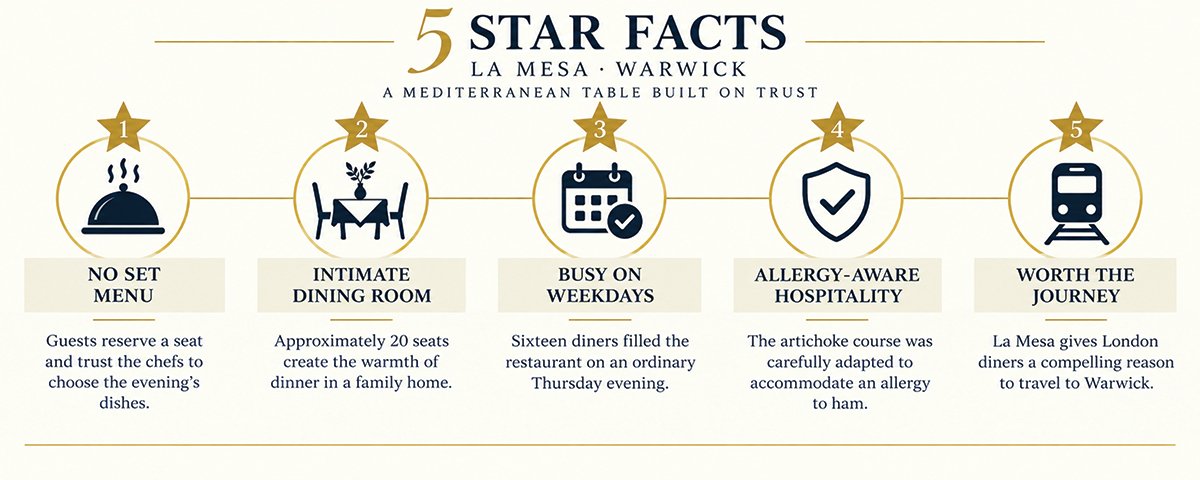
The restaurant has no conventional menu. Dinner is served by reservation, and the kitchen decides what its guests will eat. For some diners, relinquishing choice may feel unsettling. Here, it is the point: you are being welcomed rather than processed.
Even on a weekday, 16 of the dining room’s approximately 20 seats were occupied. Anyone considering a weekend visit would be wise to reserve several weeks ahead.
Inside, yellow light pools over the tables. Candles flicker against dark walls, and Spanish music plays at a level that allows conversation to continue. The room is cosy without becoming theatrical—relaxed, intimate and seemingly designed to make strangers lower their voices.
La Mesa transforms dinner into intimate hospitality, pairing a glowing room with assured Mediterranean cooking and a genuine sense of discovery.
At the centre of the experience are master chefs Gerrard, who is from Spain, and Nichole. Their cooking moves around the Mediterranean, but its governing principle is hospitality rather than geography. Each course arrives as part of a sequence: considered, personal and free from unnecessary ceremony.
Lentils with Oregano
The amuse-bouche was a small glass cup of lentils with oregano. It was dark, earthy and concentrated, with the herb lifting the lentils’ natural richness. Its size suggested modesty; its flavour did not. This was an opening statement delivered in a low voice—a spoonful that prepared the appetite without exhausting it.
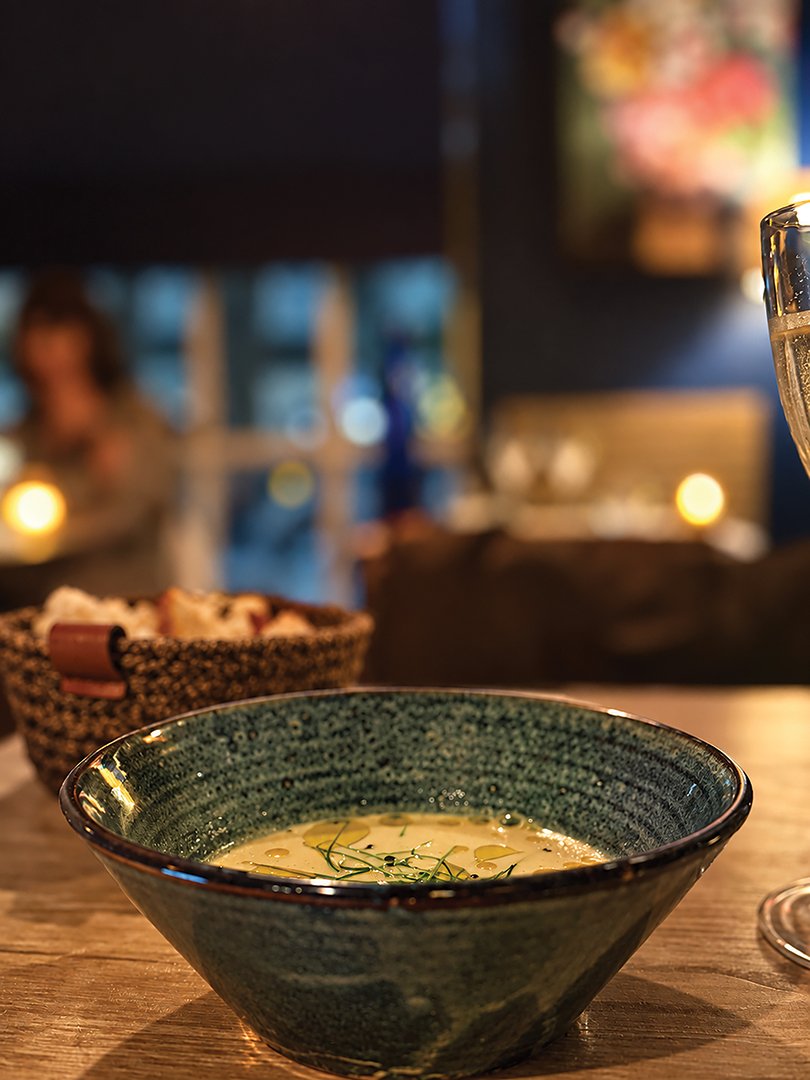
Slow-cooked sweet white onions form the foundation of this silky, comforting soup, finished with Comté and delicate strands of green garlic. The cheese brings savoury depth, while the garlic adds freshness and fragrance. Rich without becoming heavy, it demonstrates the kitchen’s gift for balancing generosity with restraint and precision.
Confit Sweet White Onion Soup with Comté
The soup was made from sweet white onions cooked slowly until their sharpness had softened into something mellow and almost silky. Comté added a savoury depth, while the fine green strands of garlic on the surface brought freshness and a gentle aromatic bite.
Onion soup can easily become heavy or excessively sweet. This one retained balance. It was comforting, certainly, but sufficiently disciplined to remain elegant.

The confit artichoke arrives tender and lightly browned, brightened by lemon and the saline intensity of anchovy. Serrano ham was omitted to accommodate my allergy, yet the plate remained complete and expressive. It is a thoughtful example of hospitality, adaptation and confident cooking working together without compromise at La Mesa.
Confit Artichoke with Lemon and Anchovy
The artichoke would ordinarily be served with Serrano ham, lemon juice and anchovy. Because I have an allergy to ham and related products, I asked for it to be left out. The kitchen accommodated the request without making the altered plate feel incomplete.
The artichoke arrived opened across the dish, its leaves soft from slow cooking and lightly browned at their edges. Lemon cut through its buttery texture, while anchovy supplied the salty intensity that the omitted ham might otherwise have contributed. It was a persuasive example of adaptation: the character of the dish remained intact, and the diner’s needs were treated as part of hospitality rather than as an inconvenience.
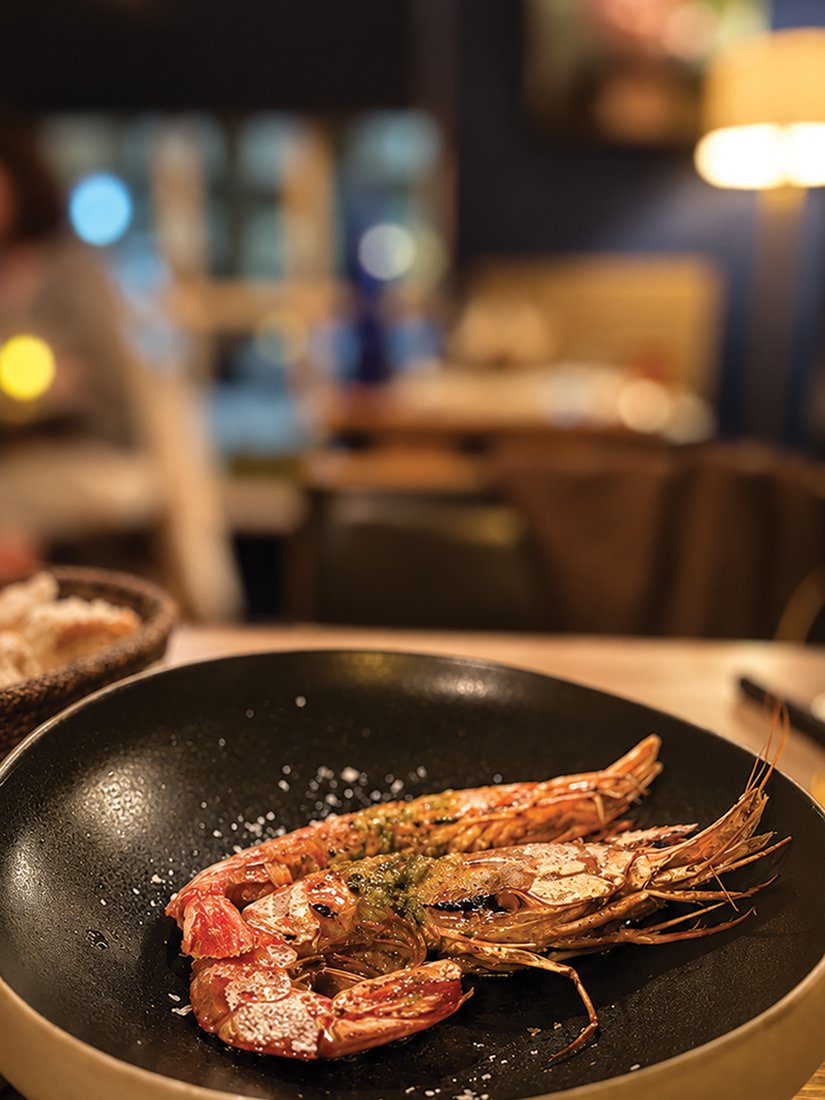
Valencian garlic prawns with salsa verde were the evening’s triumph: sweet, succulent and deeply aromatic, with garlic and herbs supporting rather than masking the seafood. This was food to eat with your hands, abandoning knife and fork. Messy fingers became part of the pleasure—and the sincerest compliment of all.
Valencian Garlic Prawns with Salsa Verde
Then came the evening’s simplest pleasure—and its high point.
The Valencian garlic prawns, served with salsa verde, were quite simply perfect. Garlic, herbs and the sweetness of the prawns met without one smothering another. This was not food that encouraged good manners. Fork and knife became irrelevant; I ate the prawns with my hands, as they deserved to be eaten.
Afterwards, I made a second visit to the washroom simply to clean my fingers. It was a small inconvenience and perhaps the most sincere compliment I could offer. Some dishes are admired from a polite distance. This one demanded participation.
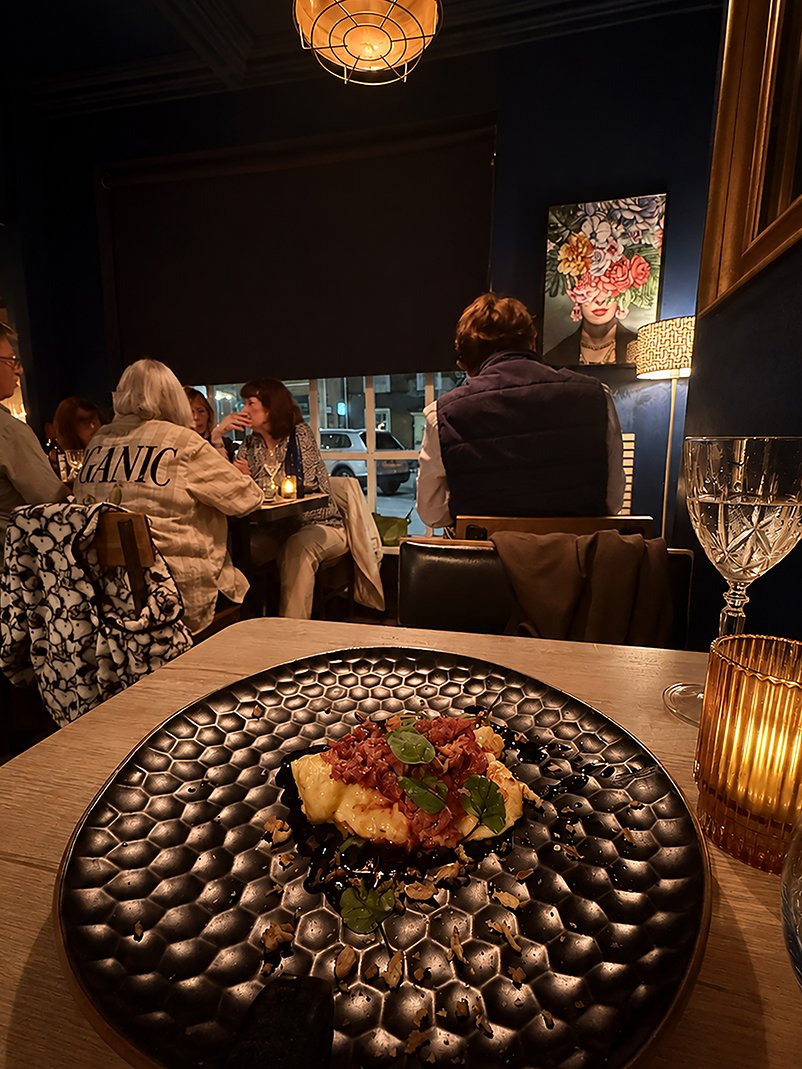
The pressed main course, accompanied by truffle and goat’s-butter mash, brings a deeper, more substantial rhythm to the meal. The mash is creamy yet gently tangy, while truffle contributes its unmistakable earthy perfume. Rich, comforting and composed, the plate marks the moment when dinner settles into complete and lasting satisfaction.
The Pressed Course with Truffle and Goat’s-Butter Mash
The savoury sequence concluded with a pressed main course accompanied by truffle and a mash enriched with goat’s butter. The presentation was more composed and substantial than that of the earlier plates, yet it belonged to the same generous style of cooking.
The mash carried a gentle tang from the goat’s butter, preventing its richness from becoming dull, while truffle contributed its unmistakably earthy perfume. Following the brightness of the prawns, this was a deeper and more autumnal course—the point in the evening when dinner settled into complete satisfaction.
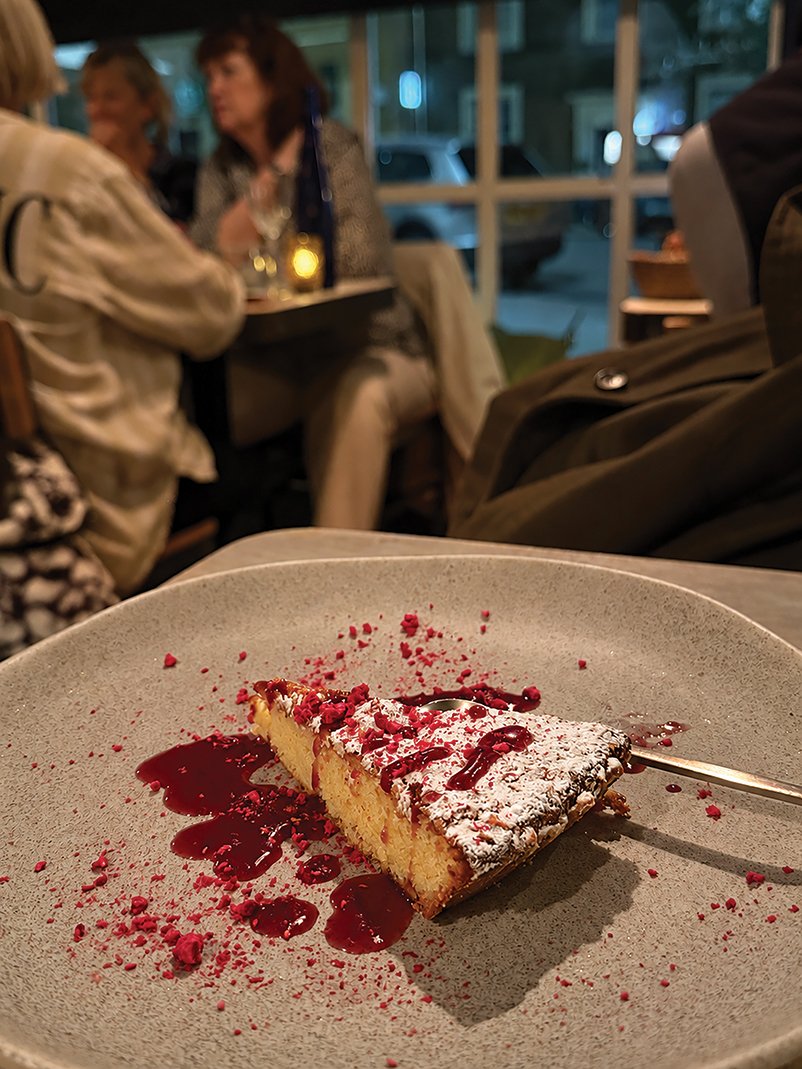
Spanish almond cake closes the tasting menu with fragrance, texture and measured sweetness. Its nutty richness feels generous without becoming excessive, while the fruit sauce introduces colour and welcome acidity. Rather than competing with the courses before it, this quietly assured dessert brings the evening to a calm, satisfying conclusion.
Spanish Almond Cake
Dessert was Spanish almond cake, an ending that felt entirely natural. Almond gave the cake fragrance and substance without excessive sweetness. It did not attempt to overwhelm what had come before; instead, it closed the meal with the calm assurance of something baked for the family table.
That description—the family table—is ultimately the key to La Mesa. Its lack of a menu is not a gimmick. It is an invitation to trust Gerard and Nichole, to accept the rhythm of their kitchen and to enjoy the rare pleasure of not having to decide.
London diners are accustomed to limitless choice, endless menus and restaurants built around the anxiety of selecting correctly. A journey to Warwick offers another possibility. At La Mesa, the choice is made when you reserve a seat. After that, you allow the kitchen to take care of you. Like dinner at the home of a close friend, you may not know exactly what will be placed before you. But you