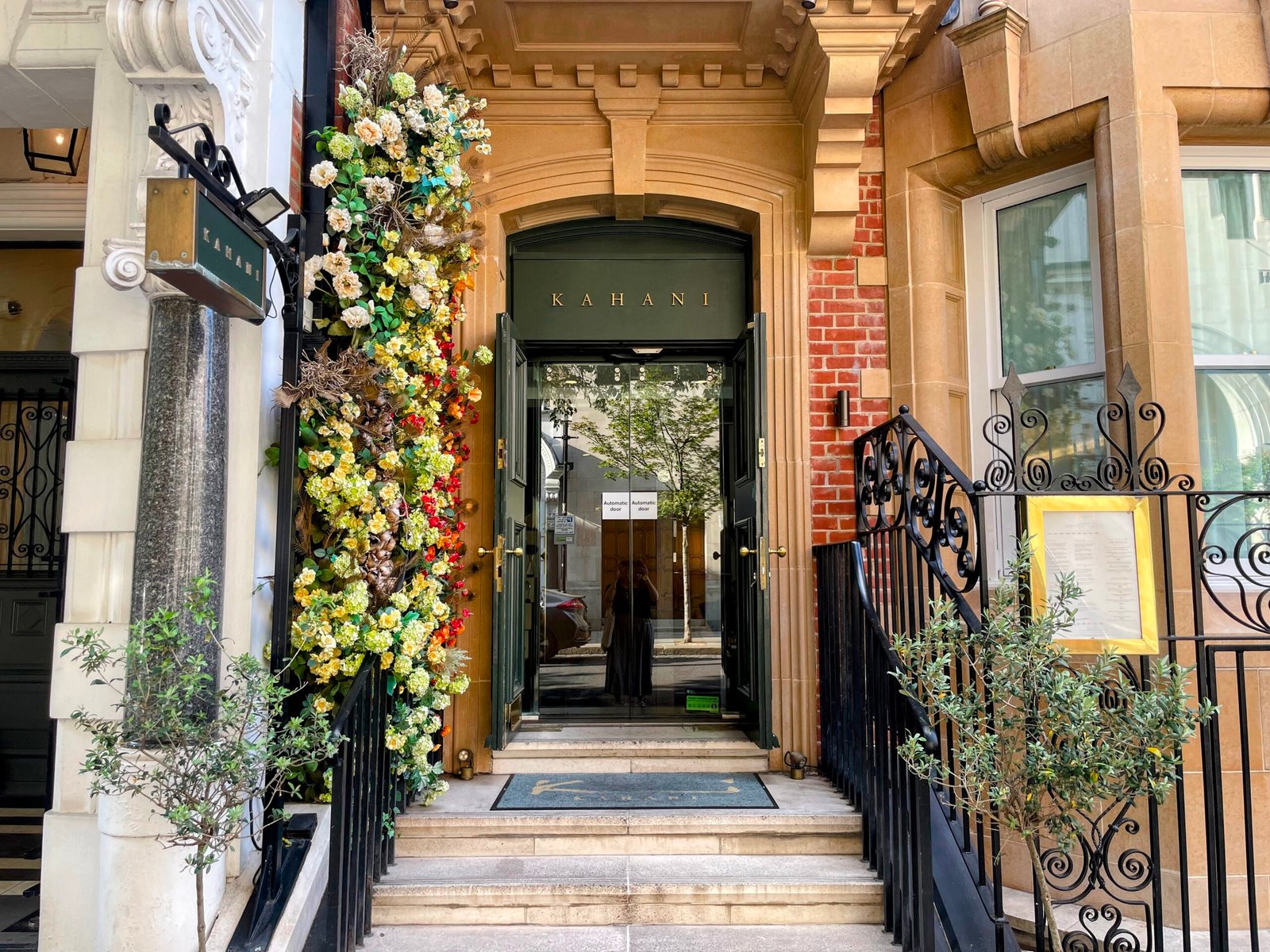
At Kahani, executive chef Peter Joseph aims to redefine Indian fine dining. While some dishes shine with bold flavours, others leave diners wanting more—a mixed bag of culinary experiences.
C hef Peter Joseph, who made his name at the Michelin-starred Tamarind, is now executive chef at Kahani Restaurant in Sloane Square. Growing up in Chennai, India, he honed his craft by watching and assisting his mother in the kitchen from a young age, observing all of her traditional Indian cooking methods. His goal for Kahani is to ‘make Indian fine dining more communal, more informal, offering diners the very best quality and a wide range of palate-pleasing flavours whilst remaining true to his heritage.’
So, does Kahani live up to its reputation? Honestly, I’m still not sure I’ve formed a decisive opinion. Between the vegetarian and the regular tasting menus, there were some real standouts, but others fell short.
Highlights
- Formerly of Michelin-starred Tamarind, Chef Joseph aims to create a ‘communal and informal’ fine dining experience rooted in his Indian heritage.
- The amuse-bouche of spiced chickpeas and the blood orange sorbet and mint-lime granita palate cleanser were highlights.
- Each dish showcased a delightful mix of crunch and creaminess.
- A blend of fine dining and homely warmth, though the £80 tasting menu and upscale atmosphere raises questions about the ‘informality’ Chef Joseph seeks.
- The ‘chocolate delight’ and poached peach dessert offered memorable sweet finales to the meal.
We started out strong with the chef’s amuse-bouche of the night: a filo tartlet filled with warm spiced chickpeas, a tamarind chutney, and sweet yoghurt. This bite was well-balanced, showcasing an excellent mix of textures and a variety of spicy, warm, sweet, and cool elements.
The first official course was a fennel-spiced wild mushroom cake with a lotus stem broth. While the earthiness of the mushroom came through, its classic mushroom flavour wasn’t present. In fact, without the menu in front of me, I may have mistaken it for a spicy lentil cake. It cried out for a bright note to cut through the dense, spicy patty; this may have been the intention of the lotus sauce, but the broth was entirely overpowered.
The second courses for both the meat and the vegetarian menus were equally lacklustre. The vegetarian option—a small green apple and bitter gourd salad with bleu cheese dressing—offered little beyond the bleu cheese itself. The salad desperately needed salt and more green apple to come through, or actually anything to give it body and dimension. While the meat dish was far better, the scallop was not incredibly tender, and I could smell a fishy odour when the waitress was still steps away from our table. However, I did appreciate the coconut moilee and the crispy, airy crunchies on top.
The meal made some steps uphill with the arrival of the third courses. My swordfish was meaty yet tender, with a slight funk from the mustard and a creamy complement from the tapioca mash. The vegetarian broccoli was equally intriguing, featuring a whipped honey dip and crushed wheat crispy bits dusted on top. If there’s one thing Kahani excels at, it’s texture; each dish had something to add crunch and crisp, which is always something I appreciate.
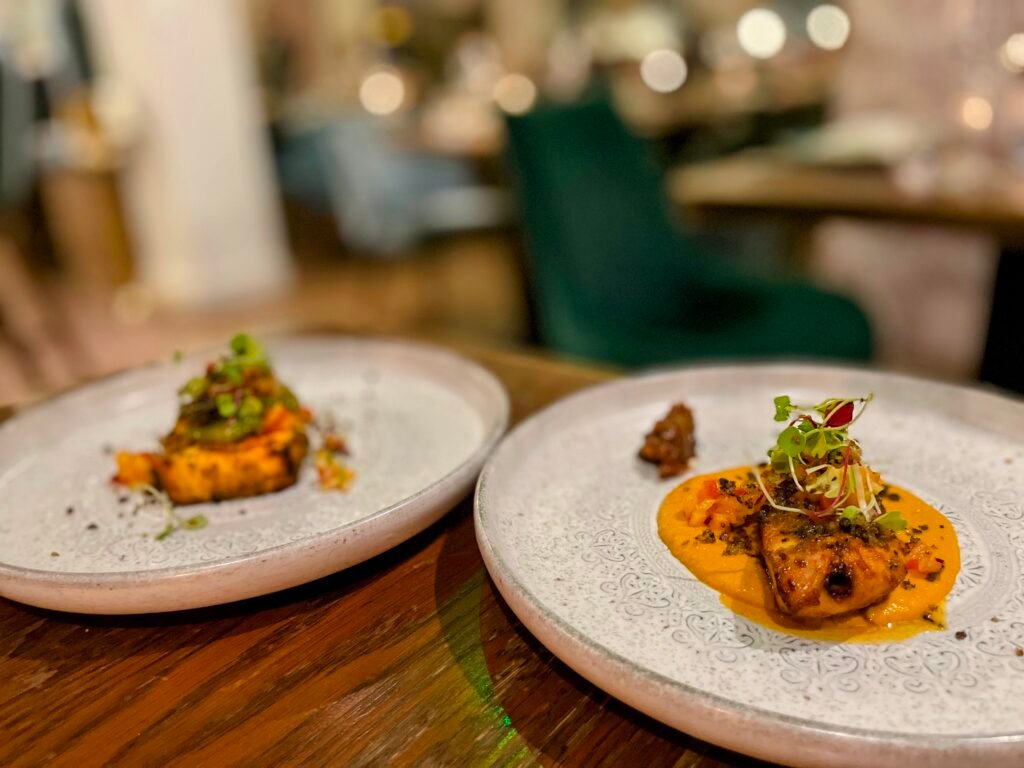
The following meat dish made its way even further up the hill, but sadly the vegetarian dish faltered yet again. One step forward, two steps back, I suppose. The guinea fowl was succulent, resting in a puddle of delicious korma sauce with incredible depth of flavour. My favourite aspect was the sweet and spicy rhubarb and raisin relish on the side, which enhanced the poultry beautifully. In contrast, the paneer dish felt one-dimensional—just a block of spiced cheese. The tang of the cheese with the spicy seasoning was lacking a sweet sauce for moisture and flavour variation. Even just a drizzle of honey would have made all the difference.
The following course was the most beguiling, as it was a sorbet—but it was not our dessert. Intended as a palate cleanser, a small scoop of blood orange sorbet was served atop a lime and mint granita. Though I was sceptical, I quickly fell in love. The orange sorbet could stand alone as a dessert, but the granita provided an herbal savouriness that made it clear your meal was not yet at the finish line. The bowl provided a refreshing respite to the warm, spicy flavours we’d indulged in so far.
Following this light interlude were our main courses: a mini lamb chop with cucumber relish and mint yoghurt, grilled artichoke heart with a veggie kofta and korma sauce, a mushroom and green pea onion-tomato curry (khumb matar), and a basket of wheat flatbread (lachha paratha). Although I’m not typically a lamb fan, the technique executed with this chop was out of this world. It cut like butter and ate just as succulent, with a hint of gaminess cooled by the cucumber and mint accoutrements. The artichoke heart was tender and acidic, pairing flawlessly with the soft spiced veg patty and creamy korma. However, the khumb matar with the lachha paratha was what we kept returning to. Perhaps it was just the quintessential Indian combination of gravy and flatbread that I had been craving all night, but the wheat note and the crunch from the bread complemented the creamy, luscious stew and the chunks of mushroom and peas were simply the cherry on top. This was the heart of humble, simple food done outstandingly well.
But potentially the highlight of the night was the desserts. I’m not entirely sure why the vegetarian and the meat menus don’t provide the same dessert, but I will never complain about variety. The ‘chocolate delight’ was one of the best bites of the meal; it was decadent and rich but slightly bitter and not overly sweet, lightened by a scoop of creamy, sugary caramel ice cream and of course—a crunchy almond brittle and crispy chocolate cake crumble for texture. The poached peach dessert reminded me of autumn, with its warming fall spices and cardamom rice pudding underneath.
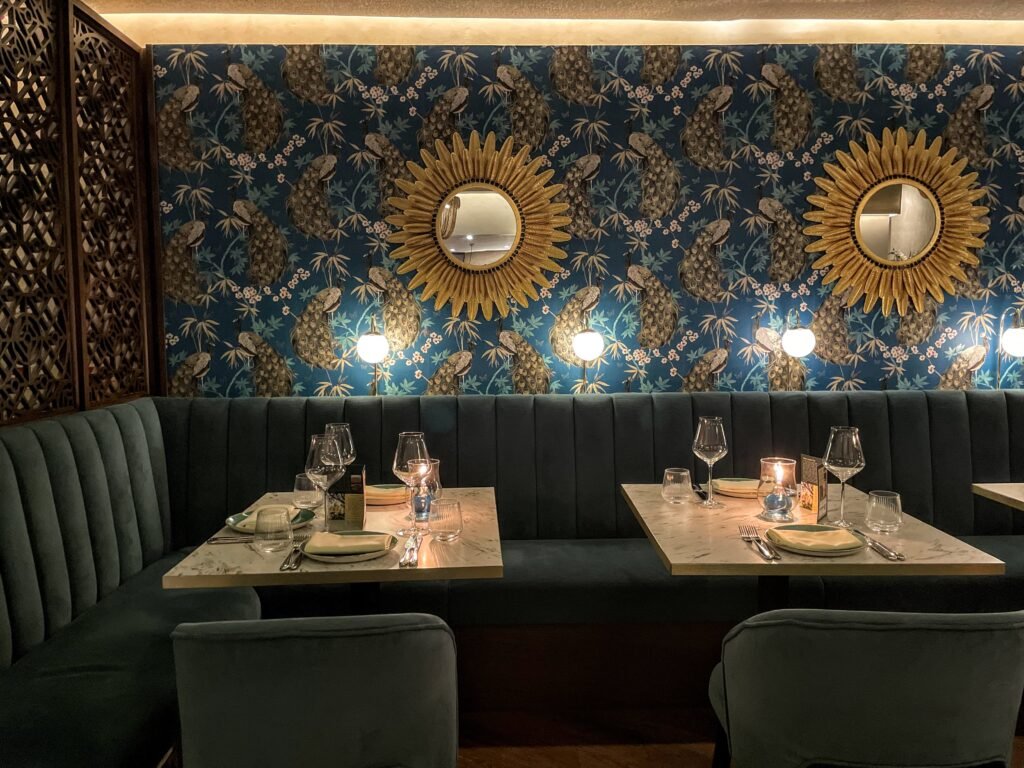
If you’re one who values ambience, potentially even more than food itself, Kahani would be the right spot for you. They strike an impressive mix between fine dining and feeling as though you’re in someone’s home—albeit a quite fancy home. Although between the low lighting, elegant velvet upholstery, bougie location, and the fact that a bite-sized tasting menu costs £80pp leads me to question Chef Joseph’s claim of making fine dining ‘more informal.’ I felt a tad underdressed in my summer linen culottes and dusty white trainers, but I did appreciate the top-notch attentive service by the waiter who noticed my friend’s cloth napkin had fallen to the floor even before we did, showing up with a clean napkin and bending to take the dirty one away.
So, what’s the verdict? Kahani has left me in a quandary. Would I have been thrilled to pay £80 for that menu? Not really. But were there some high quality, unique dishes that would draw me back? Definitely.