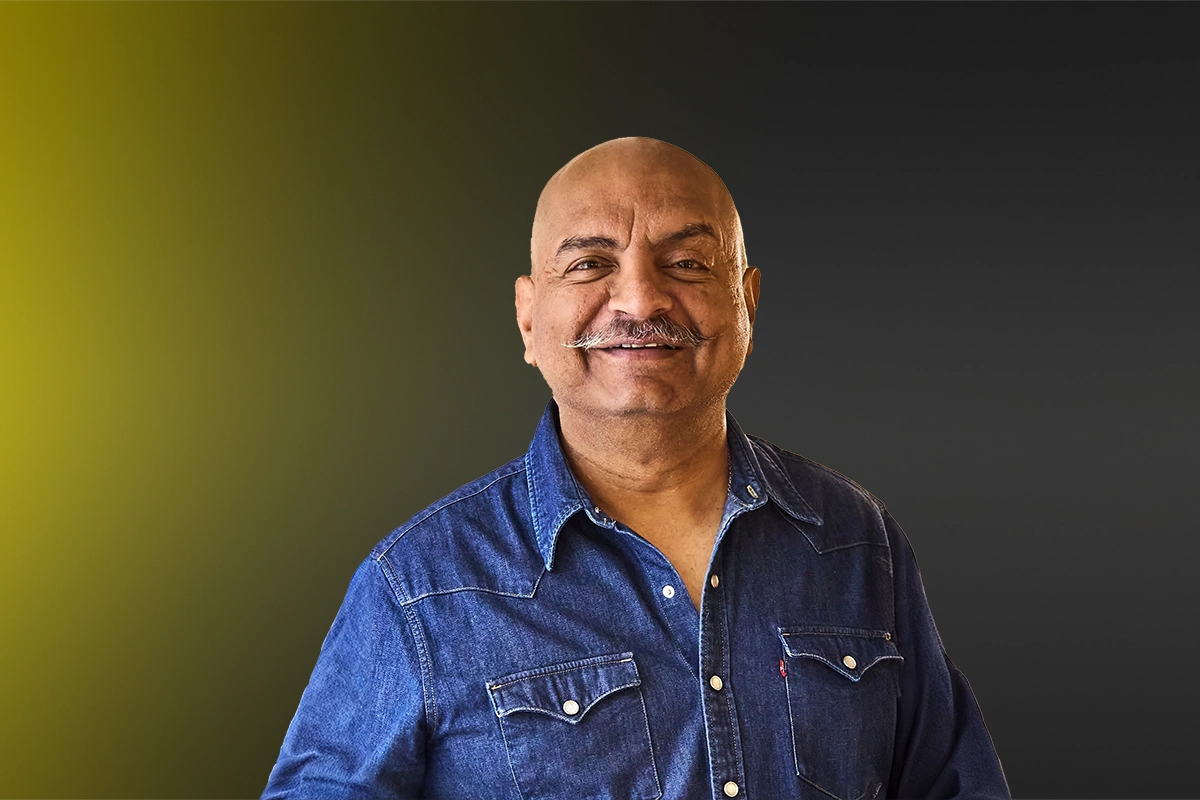
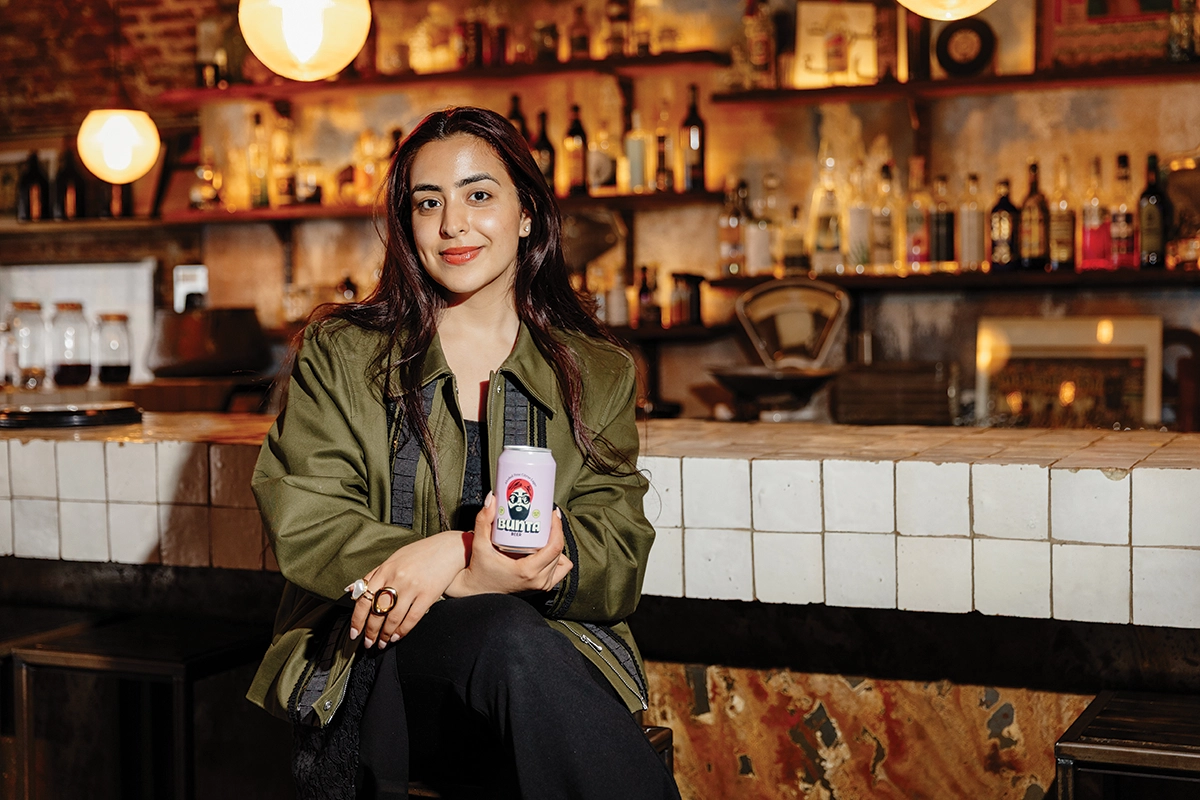
Photo: Gunikka Ahuja, founder of Bunta Beer, is reimagining modern drinking through bold flavour, thoughtful design and a fresh vision for sustainability.
Gunikka Ahuja Is Brewing the Future of Conscious Drinking
London entrepreneur Gunikka Ahuja created Bunta Beer to pair authentically with Indian cuisine while championing mindful drinking, sustainability innovation, and a fresh vision of modern hospitality.
I n a city where culinary boundaries are constantly being redrawn, it is often the quiet gaps, the overlooked details that present the most exciting opportunities. For London’s ever-evolving Indian dining scene, that gap has long sat in the glass rather than on the plate. Enter Gunikka Ahuja, the visionary founder of Bunta Beer, whose work is not merely disrupting expectations but thoughtfully redefining them.
What makes Ahuja’s approach so compelling is not just her sharp instinct for flavour, but her ability to read cultural shifts with precision. At a time when mindful drinking is reshaping social habits and diners are demanding more considered, holistic experiences, she has created something that feels both timely and quietly radical. Bunta Beer is not positioned as an alternative or a compromise, it is designed with intention, crafted to belong.
Rooted in the bold, unapologetic flavours of New Delhi yet unmistakably attuned to modern London, Ahuja’s work bridges continents and sensibilities with remarkable ease. Her flagship 0.5% citrus lager is a masterclass in balance and restraint, proving that complexity need not rely on alcohol content. More importantly, it demonstrates a deep respect for the cuisine it accompanies—something that, as she astutely observed, has too often been missing.
Yet, to reduce Bunta Beer to its liquid form alone would be to overlook the breadth of Ahuja’s ambition. Her commitment to sustainability, particularly through innovations like Buntatex™, signals a founder thinking far beyond the pint. She is challenging what a beer company can, and arguably should -be in an era defined by accountability and creativity in equal measure.
There is also a confidence to the brand that feels refreshingly contemporary. From its striking visual identity to its refusal to lean on tired cultural tropes, Bunta speaks to a generation comfortable in hybridity, one that moves fluidly between traditions, geographies, and ways of living.
In Gunikka Ahuja, we see not just an entrepreneur, but a cultural thinker, someone who understands that the future of food and drink lies as much in context as it does in craft. With Bunta Beer, she has created more than a product; she has started a conversation.
And it is one well worth listening to.
Highlights From The Interview
• Created specifically to pair with Indian cuisine
• Inspired by New Delhi’s bold flavour culture
• 0.5% ABV crafted for mindful social drinking
• Uses orange peel and coriander seed for balance
• Challenging outdated beer pairings in Indian dining
• Buntatex™ transforms brewing waste into textiles
• Bold pink branding rejects tired stereotypes
• Building a cultural brand beyond beverages
• Sustainability integrated into the business model
• Championing inclusion within hospitality spaces
What was the defining moment that made you realise there was a gap for an Indian craft beer in the UK market?
There wasn’t one single moment -it was a pattern.
I’d go out for Indian food, and the food kept getting better, more modern, more thoughtful – but the beer list hadn’t moved. It was still the same generic lagers we have been having for the past 30 years, or non-alcoholic options that felt completely disconnected from the cuisine.
As someone who loves food and had started drinking less, I realised there was nothing that actually belonged in that setting. That’s when it clicked – the gap wasn’t just for an Indian beer, it was for a beer that understood Indian food.
How did your upbringing in New Delhi influence the concept and flavour profile of Bunta Beer?
Growing up in New Delhi, flavour was everything. Food wasn’t subtle – it was layered, bold, and unapologetic.
That really shaped how I approached Bunta. I didn’t want to create a beer that disappears next to the food – it had to interact with it. The citrus, the brightness, even the way we use spice elements like coriander seed – it all comes from understanding how Indian flavours behave on the palate.
It’s less about replicating Indian drinks, and more about translating that flavour mindset into beer
You’ve said the food evolved but the beer didn’t – what specifically felt outdated about existing pairings?
It felt like the drinks hadn’t kept up with how far Indian food has come.
You now have incredible chefs rethinking Indian cuisine in a really contemporary way but the beer offering is still very one-dimensional. It’s mostly heavy lagers that don’t really engage with the food, or overly sweet non-alcoholic options that clash with spice.
There’s no real consideration for balance how a drink can cut through heat, refresh the palate, and elevate the dish. That’s the part that felt outdated.
Why did you choose a 0.5% ABV citrus lager as your flagship product?
It was very intentional.
The 0.5% ABV reflects how people are drinking today more consciously, but still socially. And the citrus lager format works incredibly well with Indian food.
Citrus naturally lifts spice, resets the palate, and keeps you coming back to the dish. It’s light enough to be sessionable, but still has structure and complexity.
We weren’t trying to make a ‘safe’ non-alcoholic beer – we were designing something functional for the table.
How do ingredients like orange peel and coriander seed enhance the experience of spice-led cuisine?
Both are already very familiar in Indian cooking, which is why they work so well.
Orange peel brings brightness and acidity, which helps cut through richness and heat. Coriander seed adds a subtle citrusy, slightly earthy note that complements spice without competing with it.
The key is restraint – they’re not there to dominate the beer, but to quietly enhance how it interacts with the food.
What challenges did you face introducing a non-alcoholic beer into a traditionally alcohol-driven category?
The biggest challenge is perception.
For a long time, non-alcoholic meant compromise – less flavour, less experience, less credibility. So you’re not just introducing a product, you’re shifting a mindset.
That’s why things like draught are so important to us. When you’re holding a proper pint, in the same glass as everyone else, it changes how the product is perceived instantly.
It stops being ‘the non-alcoholic option’ and just becomes a great beer.
How important is the growing mindful drinking movement to your brand strategy?
It’s fundamental, but we don’t position ourselves only around it.
Mindful drinking is a huge cultural shift especially in cities like London but people don’t want to feel like they’re opting out. They still want the same experiences, just on their own terms.
Bunta is built for that. It’s not about restriction, it’s about inclusion
Bunta’s branding is bold and unconventional—what story were you trying to tell through the pink can design?
We wanted to break away from what Indian craft beer is supposed to look like.
A lot of beer branding especially around Indian products leans into nostalgia or clichés. We wanted something that felt modern, confident, and a bit unexpected.
The pink isn’t just aesthetic it signals that this is a different kind of beer, for a different kind of drinker. Someone who’s open, curious, and not tied to traditional drinking norms.
Can you tell us more about Buntatex™ and how sustainability shapes your long-term vision?
Buntatex™ comes from looking at brewing waste differently.
Spent grain makes up the majority of brewing byproduct, and instead of discarding it, we’re exploring how it can be turned into biodegradable, nonwoven textiles.
For me, sustainability isn’t a side initiative it’s built into the business model. The long-term vision is a circular system where what we produce feeds into something else of value.
It’s about rethinking what a beer company can be
How has the UK hospitality scene responded so far, especially venues like Kricket?
The response from hospitality has been incredibly strong.
Chefs and operators immediately understand the role Bunta plays they’ve been waiting for something that actually complements their food and gives non-drinkers a proper seat at the table.
Places like Kricket have been amazing because they already think deeply about flavour and experience so the fit feels very natural.
What does “modern Indian identity” mean to you, and how does Bunta express that?
To me, it’s about fluidity.
Modern Indian identity isn’t one thing – it’s global, layered, constantly evolving. It’s not confined to geography.
Bunta reflects that by not trying to be traditionally ‘Indian’ or traditionally ‘British’ it sits somewhere in between. The flavours, the design, the format – it all speaks to a generation that moves between cultures effortlessly.
Looking ahead, do you see Bunta Beer expanding beyond Indian food pairings into a broader lifestyle brand?
Definitely.
Food is our entry point, but the brand is much bigger than that. We’re building Bunta at the intersection of culture, hospitality, and modern drinking.
Over time, that expands into experiences, collaborations, and potentially entirely new product categories.
The goal is for Bunta to become a cultural brand not just something you drink, but something you associate with a way of living.