A Legendary Culinary Landmark Endures
Restaurant critic George Shaw visits the one of the Capitals’s most famous restaurants, currently facing expulsion from its ancestral home.
R ecent headlines surrounding the potential eviction of the UK’s oldest and most iconic Indian restaurant venue from its Regent Street abode of 99 years, reminded me that a visit to Veeraswamy was long overdue.
Veeraswamy’s landlord is the Crown Estate, which manages a £16bn property portfolio including Buckingham Palace and other royal palaces, hundreds of private homes, office accommodation, commercial premises, our coasts, plus vast tracts of prime farmland. With an eye to more lucrative tenant, the Crown Estate has deemed that the building which has served the restaurant well since 1926, is “unsuitable for restaurant use.” It is a surprise no one noticed before now.
Edward Palmer established E.P. Veeraswamy & Co in 1896 as a food business, importing and selling Indian foods using the ‘Nizam’ trademark. A retired Anglo-Indian officer in the British Indian Army, Palmer was the grandson of an English general and an Indian princess.
Then in 1924, Palmer advised the restaurant of Indian Government Pavilion at the British Empire Exhibition. Operating a ‘pop up’ throughout the expo, Palmer managed to break the J. Lyons’ catering monopoly and served an average of 500 curries a day. This was to become London’s first high end Indian restaurant.
The early clientele was mostly civil servants and army offices returning from the ‘Jewel of Empire’, plus a sprinkling of visiting members of the homesick Indian ruling classes and nabobs, craving a spice fix.
The first offerings were from the Anglo-Indian cuisine which evolved during days of the Raj.
The kitchen eventually shifted its focus back to dishes that British customers knew well, like korma and vindaloo. Afterwards, it revamped the menu to highlight regional Indian specialties, particularly from Punjab, Hyderabad, and Kashmir.
Those old enough to have frequented curry houses in the 1970s or earlier, will recall that every establishment seemed to serve Carlsberg lager. This is a direct consequence of Prince Axel of Denmark who was introduced by the Prince of Wales during a stay in London to attend the British Empire Exhibition in 1924. The Prince of Denmark brought his own barrel of the Danish beer, which he donated to Veeraswamy and continued to send more for Christmas every year. Proving highly popular, it was imported by the restaurant and is the reason that today we still tend to associate lager with curry, rather than wine or indeed India Pale Ale (IPA).
Veeraswamy became the de facto training school for the early curry industry, with many employees eventually leaving to start their own ventures and continuing to pour Carlsberg for their thirsty customers. The likes of Kingfisher and Cobra have since captured the market.
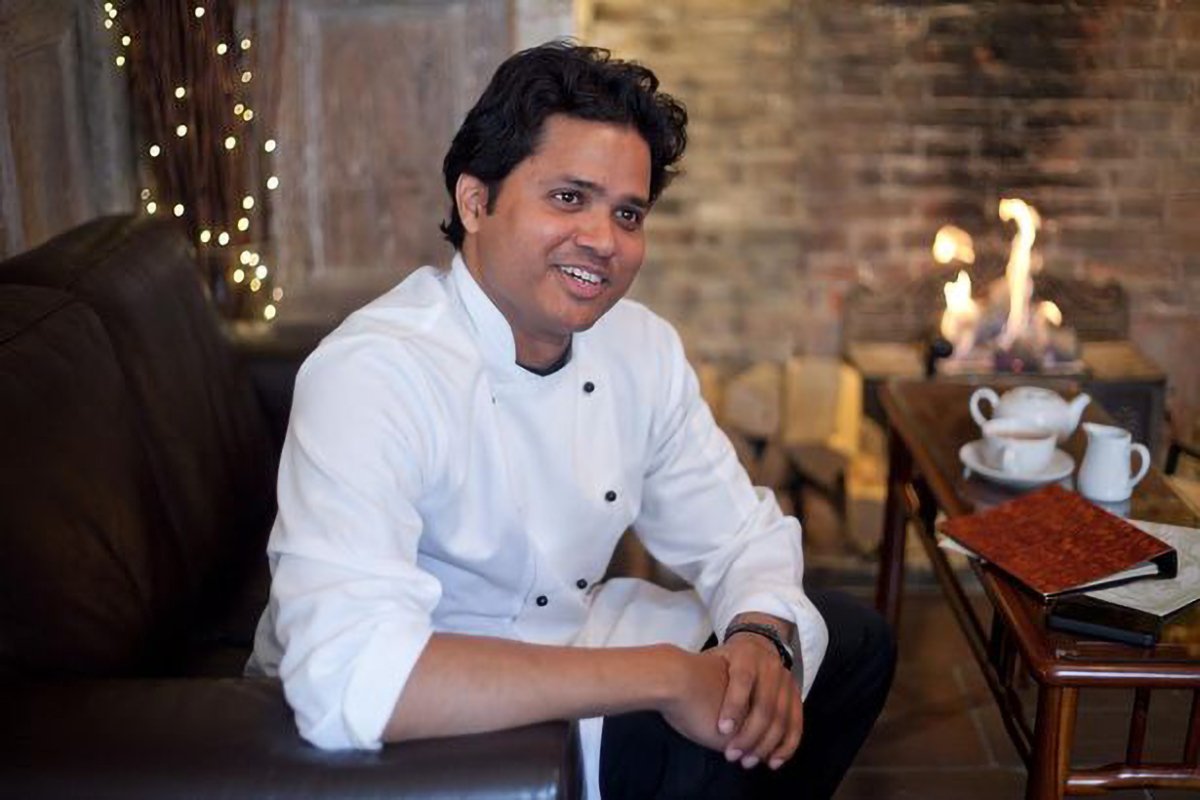
My dining companion at Veeraswamy was one of my favourite Indian chefs, Dev Biswal, owner of renowned The Cook’s Tale (formerly The Ambrette). A serial entrepreneur, Dev, who also leads small culinary tours to his native Odisha in East India (and elsewhere) is an abundant font of knowledge when it comes the land of his birth’s history and its intrinsic culinary heritage.
Although not fully onboard with a restaurant concept which pays tribute to imperial rule, he was mighty impressed by the cooking.
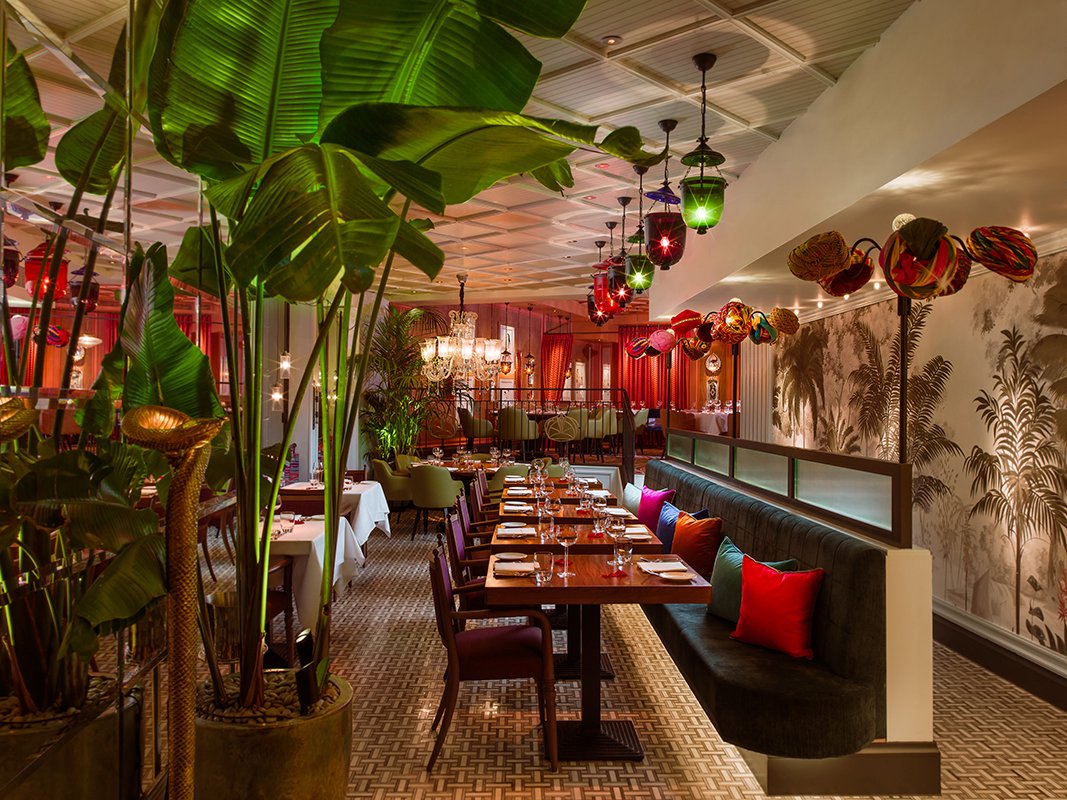
Perched on the first floor overlooking Regent Street, the setting offers the opulent ambience of a Maharaja’s palace with a splendid 1920s motif.
Renovated during the COVID-19 lockdown, the current interior has been subtly refreshed to avoid what co-founder Ranjit Mathrani refers to as becoming “embalmed in aspic”.
The restaurant features a silver-painted ceiling supporting hand-made chandeliers and lanterns from Jaipur. The walls are adorned with period Indian art and Kalighat-style paintings, intricate latticed screens, and a collection of vibrant silk turbans.
The space has discrete dining areas, the Regency, Paisley, and Veranda rooms, each with its own distinct style.
We began our lunch with a potent aperitif from the cocktail menu. Dev elected for the Smoked Cuban which gave off enticing wafts of smoldering cloves, while I went for a Guava & Basil Margarita, fringed with Himalayan salt and cayenne.
I let Dev chose as we decide to explore the classics from the Veeraswamy menu, which have helped shape the story of Indian fine dining in London for nearly a century.
We began with the Anglo-Indian Mulligatawny soup and the Malai Chicken Tikka. Both dishes were executed with technical precision and a clear respect for their historic roots.
Back in the days of Empire, no self-respecting public school educated army officer would begin a meal without eating a soup course, even at the height of a sweltering Indian summer. Once ubiquitous on London Indian restaurants’ menus, Mulligatawny has become something of a rare treat. Here, it was refined and beautifully balanced, delivering warmth and depth with elegance.
The Malai Chicken Tikka was delicately marinated, exceptionally tender and evenly cooked. The only minor observation is that a slightly higher serving temperature might have elevated the dish further.
For the main course, we shared the Hyderabadi Lamb Biryani and the Traditional Tandoori Chicken. Once again, the kitchen demonstrated confidence and consistency. The biryani was aromatic and carefully layered, showing restraint and allowing the quality of the ingredients and classical technique to take centre stage. The tandoori chicken was faultlessly cooked, succulent and gently spiced.
Across the savoury courses, the flavour profile remains intentionally faithful to tradition. It was polished, balanced and accessible. Rather than seeking to reinterpret, Veeraswamy celebrates its heritage, and this clarity of identity is a significant part of its enduring appeal. The presentation is elegant and timeless, perfectly in keeping with the restaurant’s historic setting and Michelin-starred stature.
For dessert, we followed the recommendation of Mr Mathrani, who chairs MW Eats (the group which owns Veeraswamy, Masala Zone, and Amaya) who was passing our table as we debated the options – and ordered the Black Carrot Halwa. This proved to be a highlight. The pudding was indulgent yet composed, deeply flavourful without excessive sweetness, and truly moreish. It is a fine example of how a familiar Indian dessert can be elevated through refined texture, balanced flavour, and presentation, while still retaining its soul.
To accompany, we eschew the restaurant’s historical connection to lager and shared a rather good Cote du Rhone. After all, Veeraswamy’s, sister restaurant Chutney Mary, lays claim to have
been the “first non – European restaurant in the world to have a serious wine list”, thanks to investor Nevile Neville, creator of Les Amis du Vin.
Overall, this was a lunch defined by technical consistency, classical integrity and quiet confidence in execution. Veeraswamy continues to stand as a custodian of Indian culinary history in the UK. A status achieved not through reinvention, but through refinement, discipline and a profound understanding of its own legacy.
Aficionados of exquisite Indian ding are strongly recommend to pay a visit, while they still can.
At the time of writing a petition calling on King Charles III to use his influence to keep Veeraswamy in its original site, where it kept serving food through the wartime Blitz, has surpassed the 20,000 mark.
The campaign has also garnered support from a number of high-profile chefs such as Raymond Blanc, Michel Roux and Richard Corrigan.
Readers can lend their own voice before June court case via www.change.org/p/help-save-veeraswamy-to-exist-in-its-100-year-old-location