
Four Decades Of Flavour, Family And Fearless Reinvention
After 45 years in Leamington Spa, Bombay Restaurant continues to evolve, combining family heritage, thoughtful Indian cooking and modern creativity, exemplified by its vibrant and inventive Signature Sea Bass.
Bombay Restaurant Restaurateur Receives The Flavours Of Asia Award As His Signature Sea Bass Is Named Among The 2026 Best Of Taste Asia
Iftahar Ahmed, the restaurateur behind one of Leamington Spa’s longest-established Indian dining institutions, has been featured on the cover of the sixth issue of Taste Asia magazine, accompanied by an exclusive interview exploring the remarkable 45-year story of Bombay Restaurant.
The cover feature arrives at an important moment for both Ahmed and the family business he has helped shape across several decades. Alongside the interview, Ahmed has received the Taste Asia Flavours of Asia Award, while Bombay Restaurant’s Signature Sea Bass has been selected for The 2026 Best of Taste Asia, recognising a dish that reflects the restaurant’s increasingly confident balance between tradition and innovation.
Bombay Restaurant was established in Leamington Spa in 1980 by Ahmed’s father and uncle. Ahmed began helping at the restaurant while still a teenager, initially working part-time before joining the business full-time after leaving school.
What followed was an education in hospitality built almost entirely through experience.
Over the decades, Ahmed gradually assumed greater responsibility, helping Bombay navigate profound changes in British dining culture. The restaurant has lived through the era when curry houses remained busy until the early hours, the transformation towards more experience-led evening dining, the rise of digital marketing and social media, changing customer expectations and the enormous disruption caused by the pandemic.
Yet Bombay has remained a family operation throughout.
Today, Ahmed’s daughter and son-in-law are increasingly involved in the restaurant, making succession one of the central themes of his Taste Asia interview.
For Ahmed, that continuation appears to have become more important than expansion for expansion’s sake.
“At one stage, I thought about expanding much more and making the business considerably bigger,” Ahmed tells Taste Asia. “But sometimes bigger is not necessarily better.”
Instead, his attention is increasingly focused on protecting the standards that have sustained Bombay for more than four decades and ensuring that a new generation understands the combination of consistency, hospitality and adaptability required to keep the restaurant relevant.
Tradition Meets Experimentation
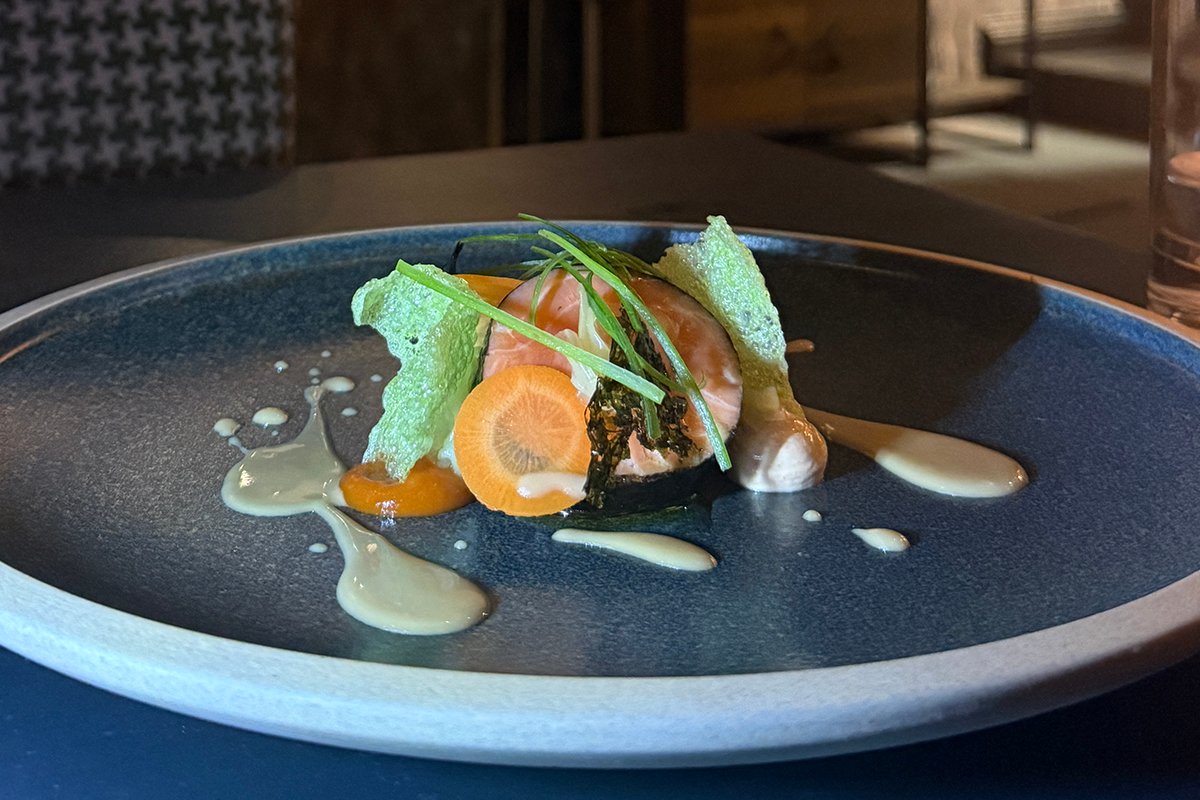
That balance is perhaps most clearly demonstrated in Bombay Restaurant’s Signature Sea Bass, now selected for The 2026 Best of Taste Asia.
The dish moves deliberately beyond conventional curry-house expectations.
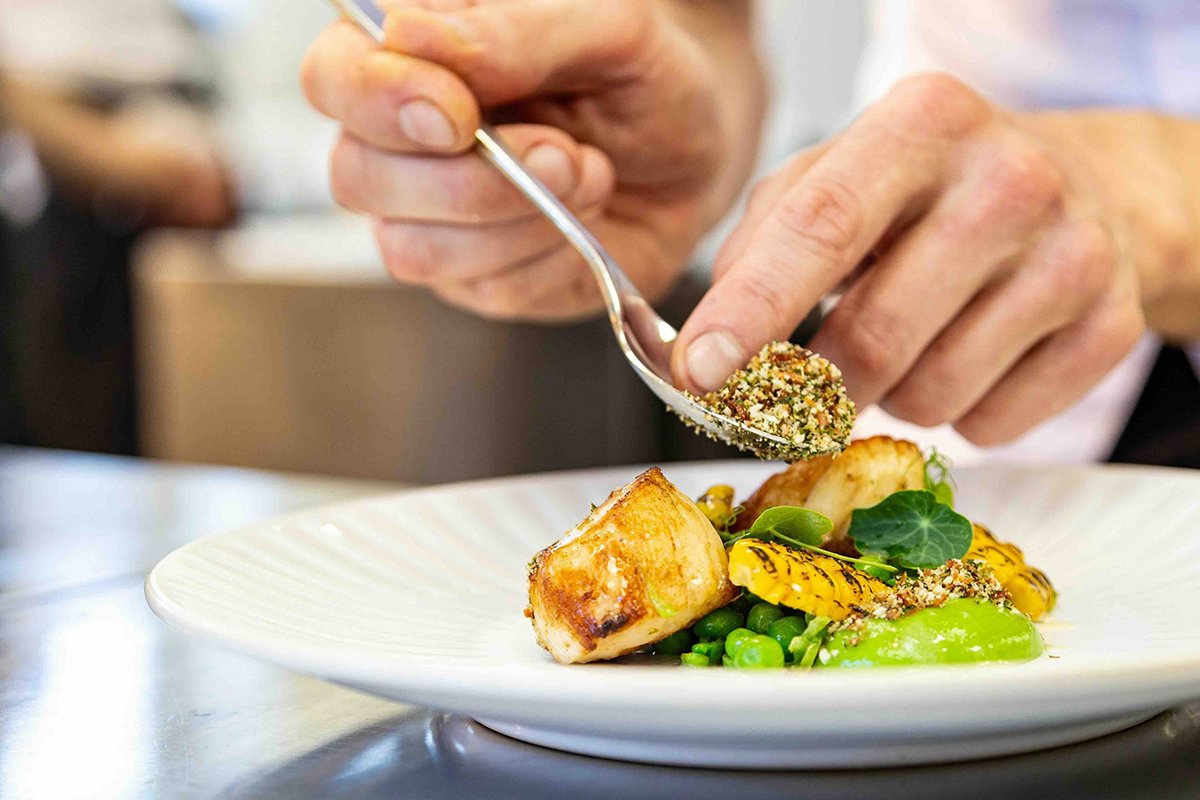
Sea bass is presented beneath a light, crisp golden coating while retaining a moist, flaky interior. A subtle mustard marinade introduces warmth, while a salsa combining apple, pear and peach provides freshness and sweetness. Balsamic acidity completes a plate built around contrast.
Taste Asia selected the dish for its originality, accomplished preparation and its ability to bring together contrasting flavours without losing sight of the fish itself.
For Ahmed, its development also demonstrates the importance of experimentation.
“Sometimes you have to experiment and trust your instincts,” he explains in the interview.
The dish emerged after Ahmed and a chef friend began exploring ways of presenting sea bass differently. After testing and tasting the idea in the kitchen, it was added to the menu and subsequently became one of Bombay’s distinctive creations.
Ahmed believes innovation is essential, but insists it must be approached without abandoning the foundations that customers recognise.
“You need both,” he says when asked to choose between tradition and innovation. “You have to keep the tradition, but you also need innovation. The important thing is finding the right balance.”
More Than Heat
His philosophy towards Indian cuisine follows much the same principle.
Ahmed argues that great Indian food should allow diners to experience individual ingredients and spices rather than measuring quality through chilli heat.
“For me, good Indian food is about balance,” he says.
It is a deceptively simple philosophy that also explains much about Bombay’s longevity.
Fresh ingredients remain a priority, with Ahmed continuing to take a personal interest in sourcing vegetables and working alongside his son-in-law when selecting fresh fish. Service, cleanliness, consistency and atmosphere are treated as equally important parts of the restaurant experience.
Marketing, meanwhile, has become an essential part of modern restaurant life.
Ahmed remembers an industry in which operators could simply open their doors and wait for customers. Today, he acknowledges that restaurants must maintain websites, social platforms, photography, reviews and constant communication with diners.
Bombay has adapted accordingly.
A Calculated Risk During COVID
One of the strongest examples of Ahmed’s entrepreneurial instincts came during the pandemic.
While many hospitality businesses were understandably reducing investment, Bombay was experiencing significant takeaway demand and, following the reopening of restaurants, frequently found itself without enough space to accommodate customers.
Ahmed decided to invest in developing the restaurant’s upstairs dining area.
It was a considerable gamble during a period in which the future of hospitality remained uncertain.
Others questioned the timing, but Ahmed believed additional capacity would strengthen the business over the long term. The upstairs space was completed ahead of Christmas and hosted a Christmas party on its opening evening.
For Ahmed, the experience reinforced a lesson accumulated across decades in hospitality: successful restaurateurs occasionally have to make calculated decisions when certainty is impossible.
Recognition With A Family Meaning
The Taste Asia Flavours of Asia Award adds another recognition to a restaurant whose walls already document decades of achievements.
Yet during his interview, Ahmed repeatedly returns to family rather than trophies.
He speaks proudly about his son-in-law’s development as a chef and his daughter’s growing involvement in the operation. Recognition for the people around him appears to carry as much significance as recognition bearing his own name.
That perspective gives his appearance on the sixth issue cover of Taste Asia a deeper significance.
The story is not simply about a restaurateur looking back over 45 years.
It is about what happens next.
Bombay has survived changing tastes, changing technology, economic challenges and a pandemic. Its future now depends on whether the qualities that sustained the restaurant through its first generation can be successfully carried into another.
For Ahmed, the objective is increasingly clear: preserve what works, remain willing to change what must change and never allow longevity to become complacency.
After more than four decades, Bombay Restaurant remains part of Leamington Spa’s dining landscape.
And with another generation preparing to take greater responsibility, the Bombay story appears far from finished.
-
RUTAB DATES MAKES A BEAUTIFUL CASE FOR INDULGENCE
Rutab’s purple-and-gold presentation box opens to reveal individually finished Medjool dates, with chocolate coatings, decorative drizzles and touches of gold leaf. Beautifully boxed and thoughtfully finished, Rutab’s filled Medjool dates bring fruit, chocolate and nuts together in a collection made for gifting—or keeping. An evening tasting of Peanut Butter and ginger-spiked Annie proved that the…
-
A Derbyshire Hotel Builds On Family Heritage And National Recognition
Six Decades Celebrated Peak Edge Hotel has secured three award shortlistings for accessibility, dining and weddings, building on national recognition as its historic Red Lion Restaurant celebrates six decades of Perez family heritage. P eak Edge Hotel is celebrating a triple awards shortlisting, continuing an extraordinary year of national and regional recognition for the family-owned…
-
THE BITTER CLUB PUTS BITTERS AT THE HEART OF THE APERITIF
The Bitter Club’s Cinnamon Orange, Hibiscus Rose and Grapefruit Elderberry cans pair botanical bitters with tonic for a ready-to-drink serve at 0.5% ABV. The Bitter Club’s B&T range pairs botanical bitters with tonic in three distinctive flavour combinations. At 0.5% ABV, these ready-to-drink serves bring floral, citrus and spice notes to the glass, offering a…
-
CATALYSE BRINGS BOTANICAL FLAVOUR AND STYLE TO THE TABLE
From left: Coral Lemon Balm & Mint, Mayi Vanilla & Green Tea, Mizu Ginger & Hibiscus and Acqua Blood Orange & Juniper—four botanical flavour combinations from Catalyse Life Drinks. Four flavours, colourful cans and an elegant design give Catalyse’s enhanced sparkling waters plenty of appeal. We enjoyed the whole selection as refreshing drinks on their…
-
FOLI Pairs Striking Design With Everyday Kitchen Appeal
From left: FOLI Extra Virgin Olive Oil, Chilli Infused Olive Oil and Mature Balsamic Vinegar, presented in distinctive coloured bottles designed to fit neatly together. Beautifully designed bottles, a chilli oil with an unexpected appearance and an enjoyable balsamic vinegar make FOLI’s collection a welcome addition to the kitchen. We tried three products that bring…
-
A Seven-Volume Collection Brings Le Cordon Bleu Into the Home Kitchen
French Technique Meets Global Flavour A new seven-volume collection, publishing in November, explores classical French techniques and recipes from around the world. A London workshop and lunch will mark its launch. Phaidon and Le Cordon Bleu are bringing the culinary school’s teaching to readers’ kitchens with Le Cordon Bleu Culinary Arts School: Volumes 1–7, a…