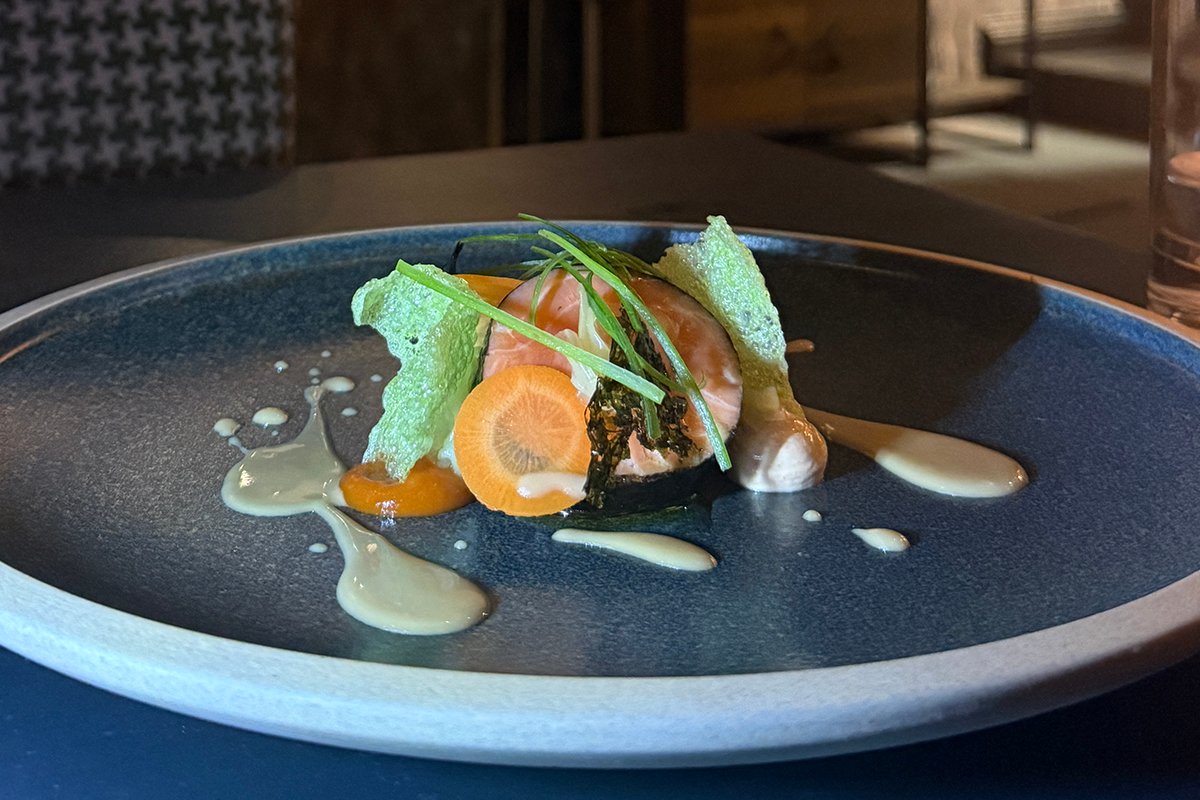
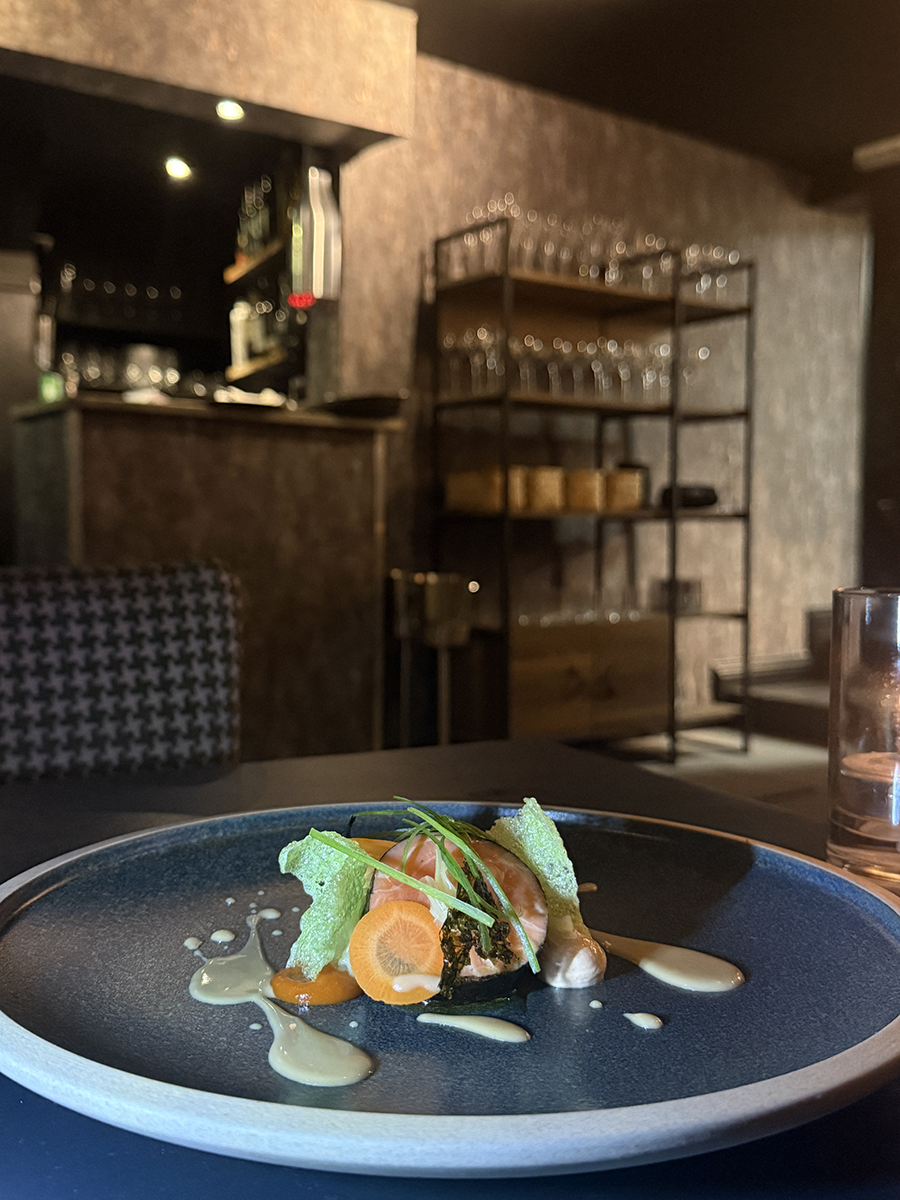
Photo: Scottish sea trout wrapped in nori, accompanied by gochujang, kimchi, pickled carrots, wasabi crackers and sushi ginger, demonstrates HEM’s creative fusion of European and Asian influences.
Where Culinary Artistry Meets Exceptional Hospitality
In an intimate Michelin Guide-recognised restaurant, chef Dan Cavell transforms familiar ingredients into extraordinary compositions, while Seb’s gracious hospitality reminds us that fine dining is as much about how we feel as what we eat.
T here are restaurants where you arrive hungry and leave satisfied. And then there are restaurants where something rather unexpected happens: you find yourself staring at a plate of food, reaching for your camera instead of your fork, and wondering whether eating it might constitute an act of vandalism.
That was my experience at HEM, a small, quietly remarkable restaurant in the historic heart of Warwick.
On several occasions throughout the evening, I photographed a dish from one angle, then another, admiring the intricate arrangement of ingredients before reluctantly picking up my cutlery. It was an unusual hesitation. The food was there to be eaten, of course, but each plate appeared so carefully constructed, so deliberate in its colours, textures and proportions, that disturbing it felt rather like touching an artwork in a gallery.
I have visited many restaurants, but rarely have I encountered a kitchen so determined to make every course a visual statement.
And yet, behind this artistry lies something equally important: a genuine understanding of flavour, craftsmanship and hospitality.
Highlights
- Michelin Guide Recognition: HEM earned its Michelin Guide listing within ten months of opening under its new name.
- An Intimate Dining Experience: A small, cosy restaurant where warm lighting, elegant design and attentive hospitality create an inviting atmosphere.
- Art on Every Plate: Chef Dan Cavell’s compositions are so intricately presented that diners may hesitate before taking their first bite.
- Inventive Tasting Menu: A carefully structured set menu exploring British ingredients, classical European techniques and international influences.
- Creative Starters: Buffalo celeriac and Spag Kohl demonstrate a playful approach to familiar dishes.
- Scottish Sea Trout: A beautifully composed fish course bringing together Scottish produce with Korean and Japanese influences.
- The Main Attraction: Guinea fowl with truffle mousse, confit leg croquette and a comforting aged Comté and sweetcorn risotto.
- A Memorable Finale: Toffee apple cheesecake featuring Tahitian vanilla, miso caramel and homemade shortbread ice cream.
- Seb’s Personal Touch: Detailed explanations of every course enhance the dining experience, while his wine pairings have earned enthusiastic praise from returning customers.
- Fifteen Years of Loyalty: Some regular diners have followed chef Cavell’s cooking since the restaurant’s earlier Tailors days.
An Intimate Restaurant With a Distinctive Personality
HEM does not announce itself through extravagance. Its dining room is relatively small, but that is precisely where much of its charm resides.
Deep charcoal walls, an almost black ceiling and softly focused lighting create an atmosphere that feels contemporary without being cold. Warm pools of illumination fall gently across the tables, while textured wall finishes, understated framed photographs and comfortable upholstered seating contribute to the intimate surroundings.
An impressive floral installation spelling out HEM introduces an unexpected note of playfulness. At the rear, an exposed brick archway provides a reminder of the building’s history, contrasting beautifully with the restaurant’s modern design.
The tables are thoughtfully spaced, allowing conversations to unfold without the uncomfortable intimacy that can sometimes accompany smaller establishments.
There is no unnecessary grandeur. No elaborate chandeliers. No ostentatious decoration.
Instead, HEM feels cosy, warm and welcoming — the sort of place where one can settle comfortably into an evening without feeling obliged to dress or behave for an audience.
The restaurant’s connection to the past is particularly interesting. Before HEM opened in early 2025, the premises housed Tailors, a restaurant long associated with chef Dan Cavell. Its transformation into HEM represented a new chapter rather than a complete departure from the culinary history of the address.
Together with Seb, the owner and maître d’, Cavell has created a restaurant that balances serious culinary ambition with the welcoming character of an independent neighbourhood establishment.
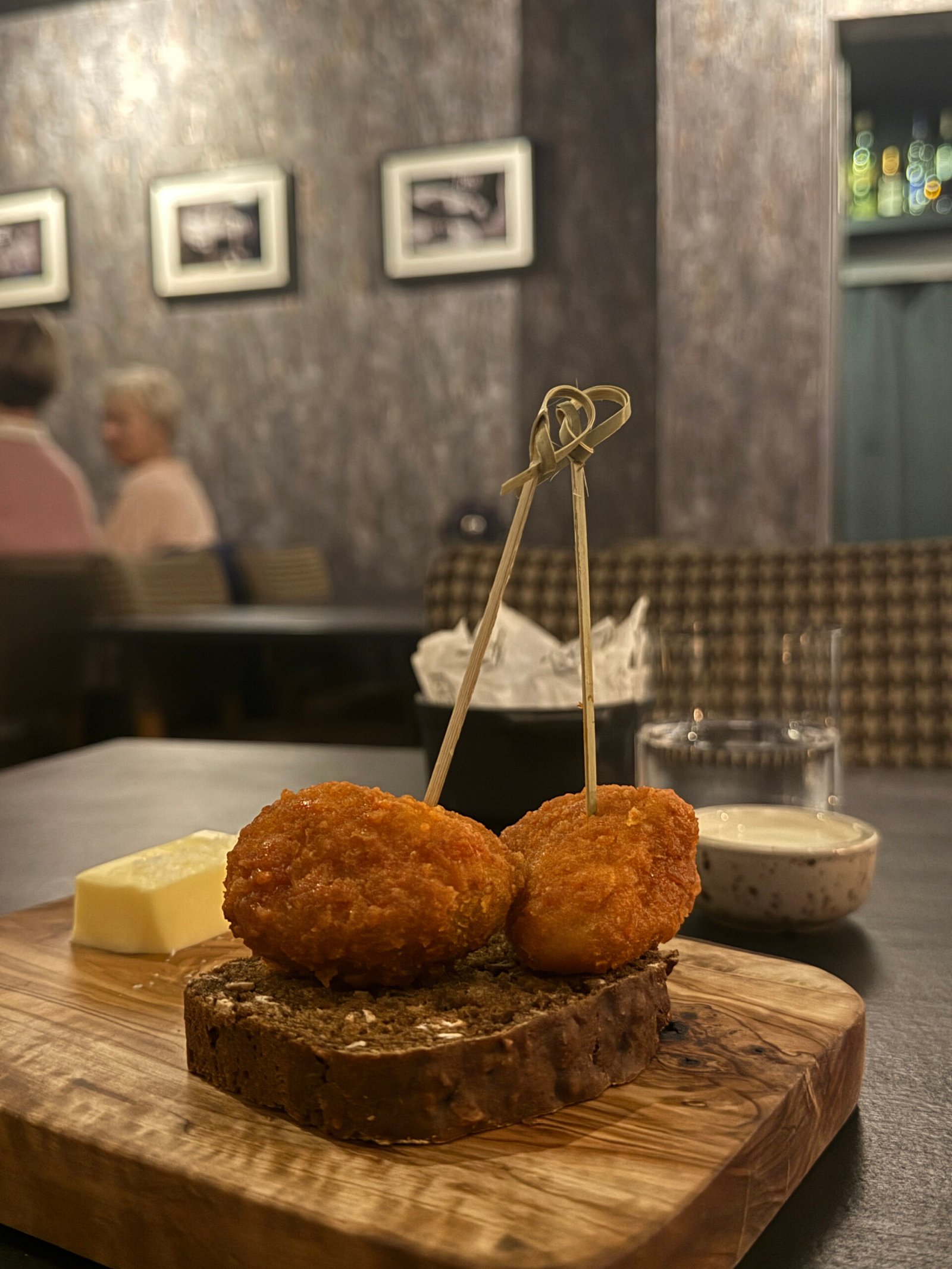
Buffalo Celeriac
Crisp golden buffalo celeriac croquettes, served with stout and black treacle bread, fermented chilli sau
The Opening Course Sets the Tone
The evening begins with a deceptively rustic arrangement: dark, stout-enriched bread, salted butter and two beautifully golden buffalo celeriac croquettes, presented on a substantial wooden board.
The bread, made using stout from Birmingham Brewing Company and black treacle, offers an inventive interpretation of malt loaf. Its dark, earthy appearance is a striking departure from the conventional bread service that accompanies so many tasting menus.
Then comes the playful surprise.
The crispy buffalo celeriac is accompanied by fermented chilli sauce and blue cheese ranch dressing, borrowing inspiration from American buffalo wings while placing an often-overlooked root vegetable at the centre of the experience.
The croquettes, with their beautifully textured golden crusts, resemble little savoury treasures. Their presentation is simple, almost rustic, but the culinary idea behind them is anything but ordinary.
Already, Cavell is revealing something about his approach: an affection for familiar dishes, combined with a willingness to dismantle and reinterpret them.
It is an imaginative opening, and one that prepares the diner for a menu full of surprises.
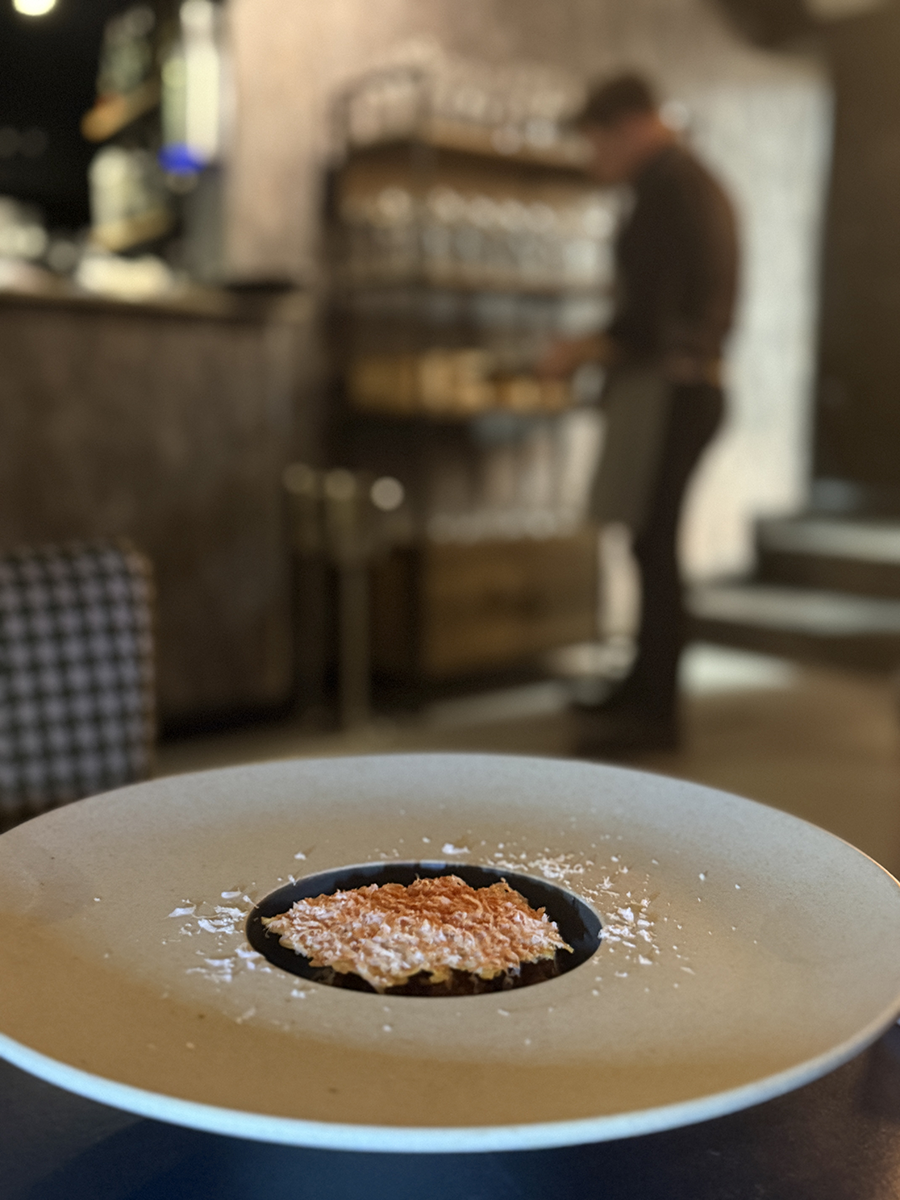
Spaghetti Bolognese Without the Spaghetti
The second course is called Spag Kohl, and its very name offers a clue to the chef’s sense of humour.
Imagine spaghetti Bolognese, then remove the spaghetti entirely.
In its place comes spiralised kohlrabi, carefully brined and combined with tomato molasses, buffalo mozzarella and smoked vegetarian mince. Aged Parmesan, a Parmesan crisp and tomato powder complete the composition.
Served in the recessed centre of a broad, pale ceramic plate, the dish resembles a miniature culinary installation. The fine orange-red garnish almost conceals the ingredients underneath, encouraging curiosity before the first forkful.
It is a clever reinterpretation of an Italian classic, where the familiar relationship between pasta, tomato, cheese and savoury richness is explored through an entirely different set of textures.
What I particularly appreciated was the intelligence of the concept. It is not simply a dish created to look unusual. There is a recognisable culinary idea behind the presentation.
Cavell takes something deeply familiar and asks a simple question: what if we approached it differently?
That sense of curiosity becomes one of the evening’s defining pleasures.
Scottish Sea Trout With an Asian Accent
The next course takes us considerably further from Warwick, at least in culinary terms.
Scottish sea trout, wrapped in Japanese nori seaweed, arrives with an intriguing collection of Korean-inspired accompaniments: gochujang, kimchi, pickled carrots, sushi ginger, wasabi crackers and fresh spring onions, accompanied by a specially prepared trout dressing.
Visually, it is one of the evening’s most arresting plates.
The delicate coral colour of the trout contrasts beautifully with the deep blue-grey ceramic beneath it. Slender green spring onions cross the composition, while translucent wasabi crackers rise above the fish like delicate pieces of sculpture.
Small pools of dressing, vivid orange accents and carefully positioned garnishes complete an arrangement that seems designed with the eye of an artist.
The culinary proposition is equally ambitious.
Gochujang introduces fermented chilli complexity; kimchi contributes sharpness and depth; pickled carrots and sushi ginger offer refreshing contrasts; and nori brings the unmistakable maritime character of Japanese cooking.
It is a meeting of Scottish produce and East Asian influences, thoughtfully expressed through contemporary European presentation.
There is always a risk when several culinary traditions meet on one plate. Too many assertive ingredients can compete rather than complement one another.
Here, however, the composition demonstrates Cavell’s interest in building relationships between contrasting elements while keeping the principal ingredient firmly in view.
It was another occasion when I found myself studying the plate before touching it.
HEM Restaurant Timeline
- Before 2025 — The Tailors EraDan Cavell built his culinary reputation at Tailors Restaurant in Warwick, where he was co-owner for approximately 16 years.
- Early 2025 — HEM OpensThe restaurant was relaunched as HEM under Dan Cavell and Seb, introducing a fresh identity and a contemporary fine-dining concept.
- Within 10 Months — Michelin RecognitionHEM secured a listing in the Michelin Guide, bringing recognition to its inventive cooking.
- 2026 — Continued RecognitionAccording to Seb, HEM retained its place in the Michelin Guide, further establishing its presence on Warwickshire’s dining scene.
- October 2026 — Taste London VisitTaste London experiences HEM’s tasting menu, documenting its artistic presentation, inventive flavours and welcoming hospitality.
Guinea Fowl Reveals the Kitchen’s Classical Foundations
If the earlier courses demonstrate Cavell’s imagination, the main course reveals the considerable technical foundations beneath it.
Guinea fowl, truffle and sweetcorn form the centrepiece of the evening.
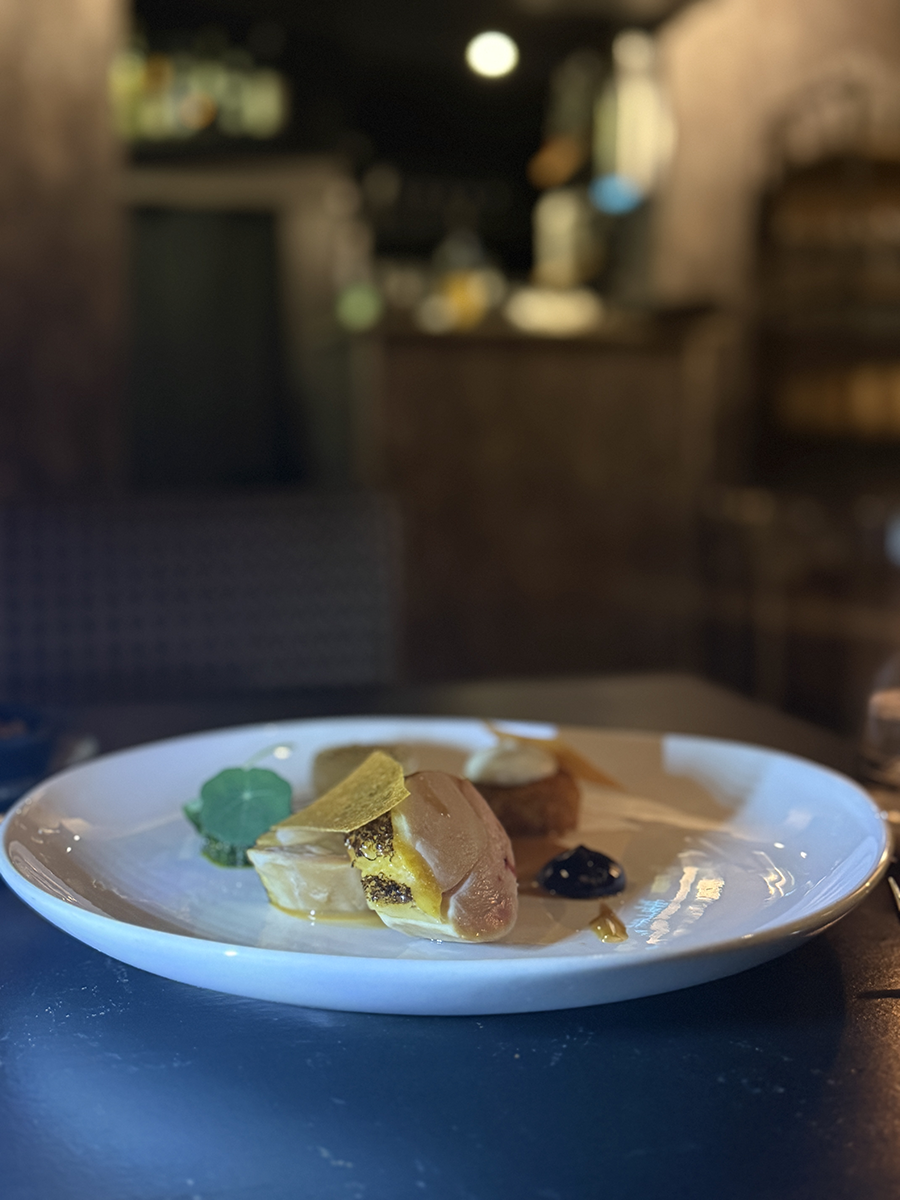
The breast is carefully prepared with truffle mousse piped beneath the skin, an accomplished technique that introduces earthy richness while preserving the identity of the poultry.
The leg meat is treated entirely differently. Removed from the bone, confited and transformed into a golden croquette, it provides a second expression of the same bird.
Around these principal elements, Cavell assembles an impressive supporting cast: a classical soubise of creamed onion, roasted onion, black garlic ketchup, delicate potato crisps, kale pesto and guinea fowl jus.
There is a great deal happening on this plate, but its presentation remains carefully balanced.
The gently coloured breast, golden croquette and darker accompaniments sit upon a generous white ceramic surface, their placement creating the impression of an artwork whose apparently effortless composition conceals considerable planning.
This is classical technique expressed through a modern culinary vocabulary.
The truffle mousse, confit preparation, soubise and carefully constructed jus suggest a chef comfortable with demanding kitchen disciplines. But the addition of black garlic ketchup and kale pesto gives the dish a more individual identity.
Alongside arrives a small black pan containing aged Comté and sweetcorn risotto, generously finished with crispy onions.
Of all the accompaniments presented during the evening, this is perhaps the most reassuringly comforting.
The nutty richness associated with mature Comté, the natural sweetness of corn and the crunch of golden onions create a combination that feels generous and familiar.
Its rustic presentation is also a welcome contrast to the more elaborately composed principal plate.
Together, the guinea fowl and risotto demonstrate two complementary sides of Cavell’s cooking: technical sophistication and an appreciation of straightforward culinary pleasure.
It is a main course that deserves attention not merely for its appearance, but for the thought and labour involved in its preparation.
A Toffee Apple Cheesecake That Refuses to Be Ordinary
Dessert continues the evening’s theme of reinvention.
A toffee apple cheesecake might sound reassuringly traditional, but at HEM it is transformed into something far more elaborate.
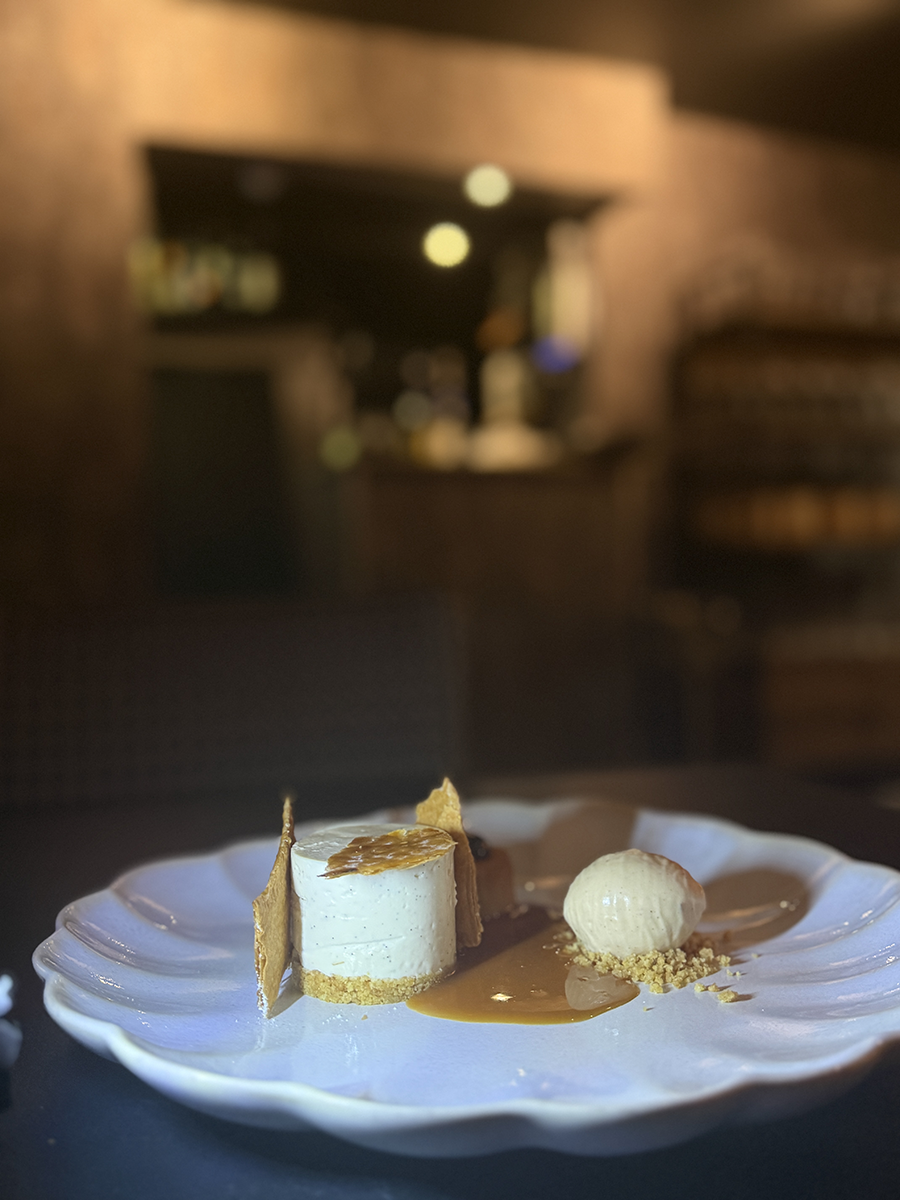
A beautifully shaped Tahitian vanilla cheesecake sits on a delicate biscuit base, accompanied by caramelised puff pastry, a Tarte Tatin-inspired apple preparation, burnt apple purée, miso caramel sauce and homemade shortbread ice cream.
The presentation is exquisite.
On a softly scalloped white plate, the cylindrical cheesecake stands between slender, upright pastry shards. A rounded scoop of ice cream rests nearby on golden crumbs, while glossy caramel introduces warmth and movement to the composition.
The overall effect is almost architectural.
The miso caramel is an especially interesting choice. Its savoury, fermented character offers a counterpoint to the sweetness of the dessert, introducing a subtle Japanese influence into a combination rooted in British nostalgia and French patisserie.
Once again, Cavell takes an idea we all recognise and gives it an unexpected identity.
The dessert provides a fitting conclusion to the meal: sophisticated without abandoning familiarity, creative without losing its sense of fun.
And yes, I photographed it carefully before finally surrendering to the temptation to eat it.
Seb Makes Hospitality Feel Personal
Impressive cooking alone does not make a memorable restaurant. The relationship between the dining room and the kitchen is equally important, and at HEM, Seb plays an essential role.
Throughout the evening, he introduced each course with clarity, warmth and an evident understanding of the ingredients and techniques involved.
Rather than simply announcing the name of a dish, he explained how it had been prepared, what accompanied it and the thinking behind the combinations.
The details mattered.
When presenting the guinea fowl, for example, he explained how the truffle mousse had been piped beneath the skin and how the leg meat had been confited before becoming a croquette. The explanation added another dimension to the meal, allowing me to appreciate the craftsmanship before tasting the result.
His manner was informative without becoming overly formal. There was time to listen, ask questions and understand the food.
This is a considerable strength.
In some fine-dining restaurants, the service can feel like a rehearsed performance. At HEM, the explanations felt like part of a conversation.
The result was an atmosphere in which sophisticated cooking became accessible rather than intimidating.
Fifteen Years of Loyalty Tell Their Own Story
Perhaps one of the most revealing moments of the evening came not from the kitchen, but from a conversation with fellow diners.
A group seated nearby had been visiting the restaurant for approximately 15 years, dating back to its earlier life as Tailors.
Their continued loyalty offered an interesting perspective on HEM’s evolution.
“We’ve never been disappointed,” one diner told me, describing the cooking as “incredibly inventive.”
Another praised its imagination: “Innovative, creative. It’s always different.”
They spoke enthusiastically about the changing dishes, the quality of the service and the pleasure of returning several times each year.
Seb’s wine pairings received particular admiration, with one guest describing them as “exceptional.”
Another customer commented on the restaurant’s atmosphere, praising the comfortable spacing between the tables and the intimate character of the dining room.
The group had brought friends to celebrate a birthday, introducing them to a restaurant they clearly valued.
One diner summed up the experience with three simple words:
“It’s pure pleasure.”
Such remarks are worth considering.
A Michelin Guide listing brings recognition, and a beautifully presented tasting menu can generate attention. But keeping customers returning for 15 years, through changes of name and identity, suggests something altogether more substantial.
It speaks to consistency, trust and the ability to remain interesting without losing the warmth that first attracted diners.
Michelin Recognition Without Pretension
HEM earned its place in the Michelin Guide within ten months of opening under its new name, an impressive achievement for an independent restaurant in a historic market town.
It is important to distinguish Michelin Guide recognition from a Michelin star. HEM is a Michelin-selected restaurant, not a Michelin-starred establishment.
Nevertheless, the recognition reflects the ambition behind the kitchen and the standards its owners are seeking to maintain.
What I found especially appealing was that the restaurant did not allow its culinary aspirations to overwhelm its personality.
There was no sense of unnecessary ceremony, no extravagant display of luxury and no suggestion that diners should feel privileged merely to be sitting at the table.
Instead, HEM offers serious, imaginative cooking in surroundings that remain comfortable and approachable.
The restaurant operates with a set menu, an approach that allows the kitchen to present a carefully considered progression of dishes rather than an assortment of unrelated choices.
It opens on Thursdays, Fridays, Saturdays and Sundays, making advance reservations particularly advisable, especially given its intimate size.
The Verdict — When Dining Becomes an Art Form
I arrived at HEM expecting an enjoyable meal at a Michelin Guide-recognised restaurant. I left with a much stronger impression: that I had spent an evening observing the work of a chef who regards the plate as both a culinary canvas and a means of storytelling.
Each course possessed its own identity.
The buffalo celeriac was playful and rustic. Spag Kohl challenged expectations. The Scottish sea trout introduced a colourful conversation between culinary cultures. The guinea fowl demonstrated classical technique and considerable craftsmanship. And the toffee apple cheesecake brought the evening to an elegant, imaginative conclusion.
Yet the experience was about more than the cooking.
The intimate dining room, gentle lighting, thoughtful service and Seb’s engaging explanations created an environment in which the food could be appreciated without the formality sometimes associated with fine dining.
What stayed with me most, however, was that recurring moment of hesitation.
I would study the plate, photograph it and then pause before picking up my fork.
There was something almost contradictory about it. Food is made to be eaten, yet these creations seemed to deserve preservation. The arrangement of colours, ingredients and textures appeared so deliberate that I briefly felt I was about to disturb something that should remain untouched.
That, to me, is the remarkable achievement of HEM.
Dan Cavell does not merely prepare dishes. He constructs compositions that engage the eye before inviting the palate to participate.
And Seb ensures that the experience remains warm, personal and thoroughly enjoyable.
Warwick may be best known for its magnificent castle and centuries of history, but HEM offers another compelling reason to visit this beautiful town.
If art is meant to inspire emotion, curiosity and admiration, then HEM has found an unusually delicious way to make it accessible.
And unlike the masterpieces hanging in a gallery, these works of art are intended to disappear.
One wonderful mouthful at a time.
EDITORIAL INFORMATION
Restaurant: HEM, 22 Market Place, Warwick, CV34 4SL
Cuisine: Contemporary British Fine Dining Recognition: Michelin Guide Selected Dining format: Set menu
Opening days: Thursday to Sunday,
Reservations: Advance booking recommended
Website: www.restauranthem.co.uk
Editor’s Note
Dan Cavell’s Guinea Fowl, Truffle and Sweetcorn is a masterclass in precision and balance. The breast, enriched with truffle mousse beneath the skin, is elegant and deeply satisfying, while the confit leg croquette adds crispness and richness. Around it, soubise, roasted onion, black garlic ketchup and guinea fowl jus build layers of flavour without overwhelming the bird. The accompanying aged Comté and sweetcorn risotto brings warmth, sweetness and a comforting finish. Beautifully composed and technically assured, this is a dish that captures HEM’s philosophy perfectly: refined, inventive and quietly confident contemporary British cooking at its most memorable for discerning diners.